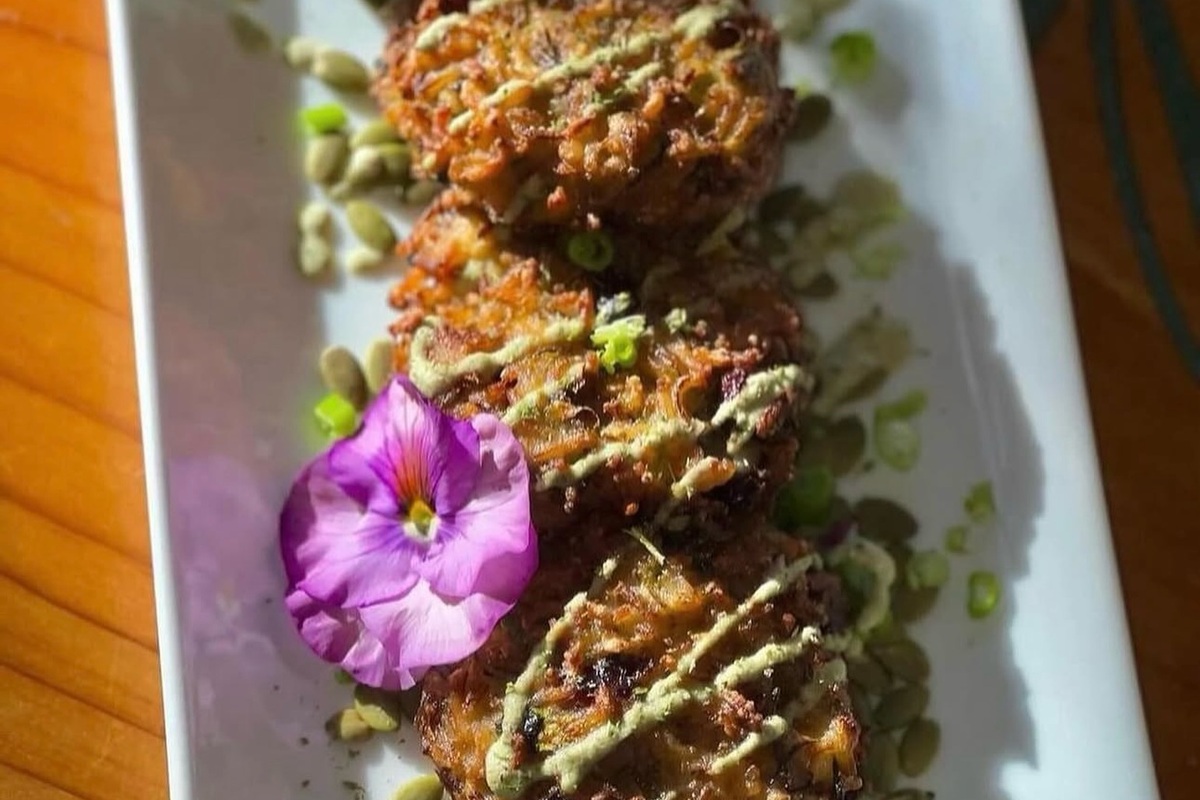
Wild rice, squash and apple fritters with pumpkin seed mousse at Wahpepah’s Kitchen | Image credit: @wahpepahskitchen / Instagram
A bowl of wild rice, a blue corn enchilada and a seven-course dinner can all belong on a list of Native American food experiences. They tell different stories, though, and the most rewarding visit starts with knowing which one you have booked.
These 11 experiences introduce contemporary Native cooking through restaurants, cultural institutions and a Navajo-guided evening in Monument Valley. Some highlight ingredients Indigenous to the Americas; others serve the comfort foods their communities enjoy today. Choose a stop that fits the place you are already visiting, then leave enough time to enjoy it. This is a nationwide selection, rather than a single driving route.
Visitor information and menus checked October 22, 2026. Seasonal dishes, service days and tour availability can change. This article contains affiliate links; we may earn a commission from eligible bookings.
Choose the experience that fits your trip
| If you want… | Start with… | Planning priority |
|---|---|---|
| A meal built around Indigenous ingredients | Indígena by Owamni, Minneapolis; Wahpepah’s Kitchen, Oakland | Reserve where offered; check the current seasonal menu |
| A casual lunch | Tocabe, Denver; Off the Rez, Seattle; Indigenous Eats, Spokane; Fry Bread House, Phoenix | Choose the correct location and its service hours |
| Food alongside cultural learning | Indian Pueblo Kitchen, Albuquerque; Mitsitam, Washington, DC; 39 Restaurant, Oklahoma City | Plan museum admission and dining separately |
| A special-occasion dinner | KAI, Gila River Indian Community, Arizona | Book the tasting menu and discuss dietary needs first |
| An outdoor guided experience with dinner | Simpson’s Trailhandler Tours, Monument Valley | Reserve ahead and confirm Navajo Nation local time |
1. Indígena by Owamni — Minneapolis, Minnesota
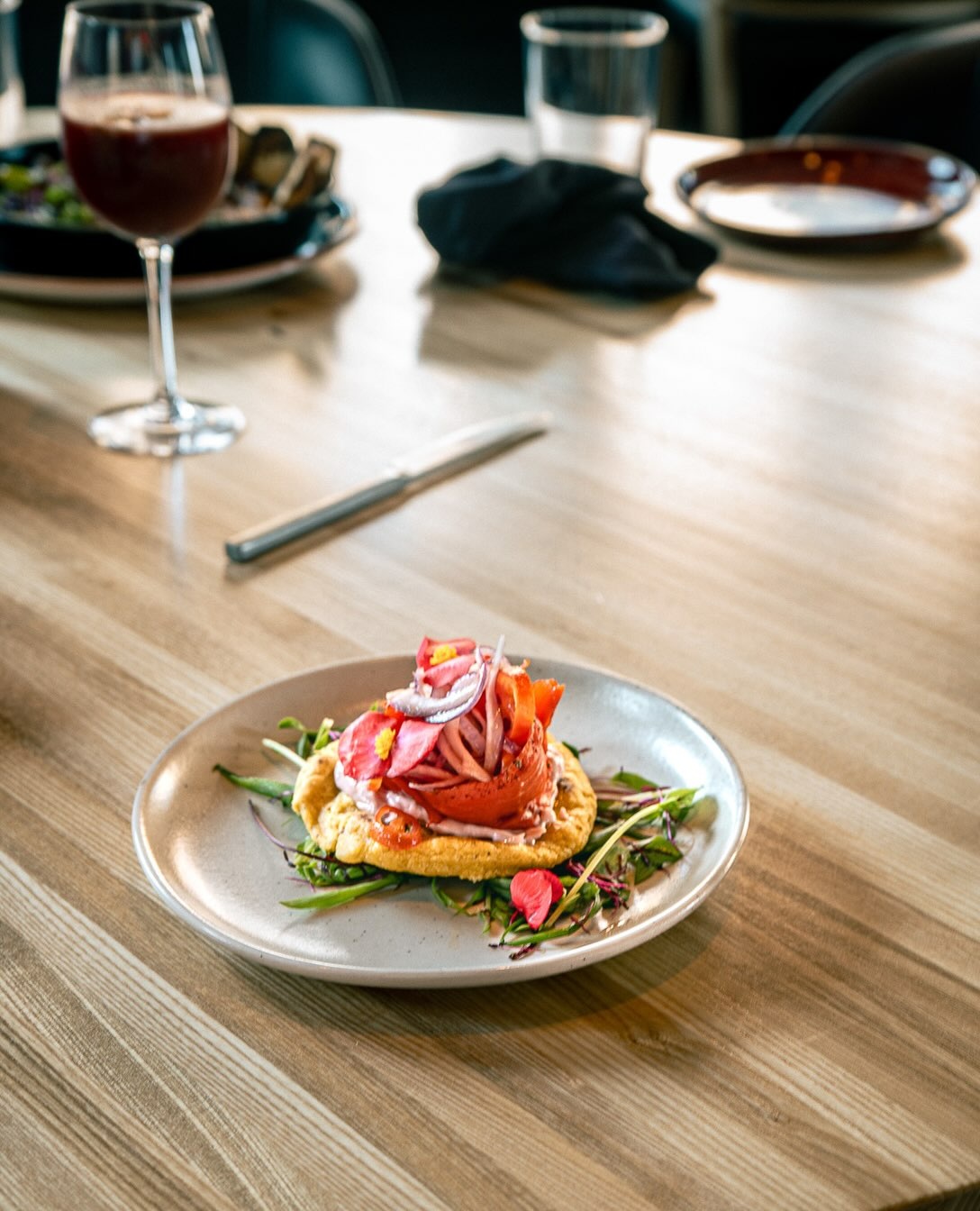
If an older restaurant list sends you to Owamni’s former riverfront address, update your map. The restaurant’s next chapter, Indígena by Owamni, opened at the Guthrie Theater in June 2026. Its separate entrance is at 806 South 2nd Street.
The kitchen’s ingredient choices make this a particularly useful introduction to decolonized cooking: it excludes beef, pork, chicken, dairy, wheat flour and cane sugar, while highlighting foods Indigenous to the Americas. The expanded offering includes game cuts, seafood and shareable plates. Rather than ordering only a familiar meat, build a meal that includes vegetables and other seasonal ingredients so you can see more of the kitchen’s approach.
Reserve a table before arranging the rest of your evening. Weekend brunch is a separate service, currently 10 a.m.–2 p.m.; a brunch reservation does not promise the dinner menu. The restaurant is owned and operated by nonprofit NATIFS, whose wider work supports Indigenous food systems. Ingredient exclusions here are a specific culinary philosophy, not a definition that every other Native restaurant must follow.
2. Wahpepah’s Kitchen — Oakland, California
Chef Crystal Wahpepah’s Kickapoo perspective meets an intertribal network of ingredients at Wahpepah’s Kitchen, at 3301 East 12th Street, Suite 133. This is a daytime destination: current service runs Wednesday–Sunday, 11 a.m.–2 p.m., with last seating 30 minutes before closing. Put it on your lunch plan before you fill the day with sightseeing.
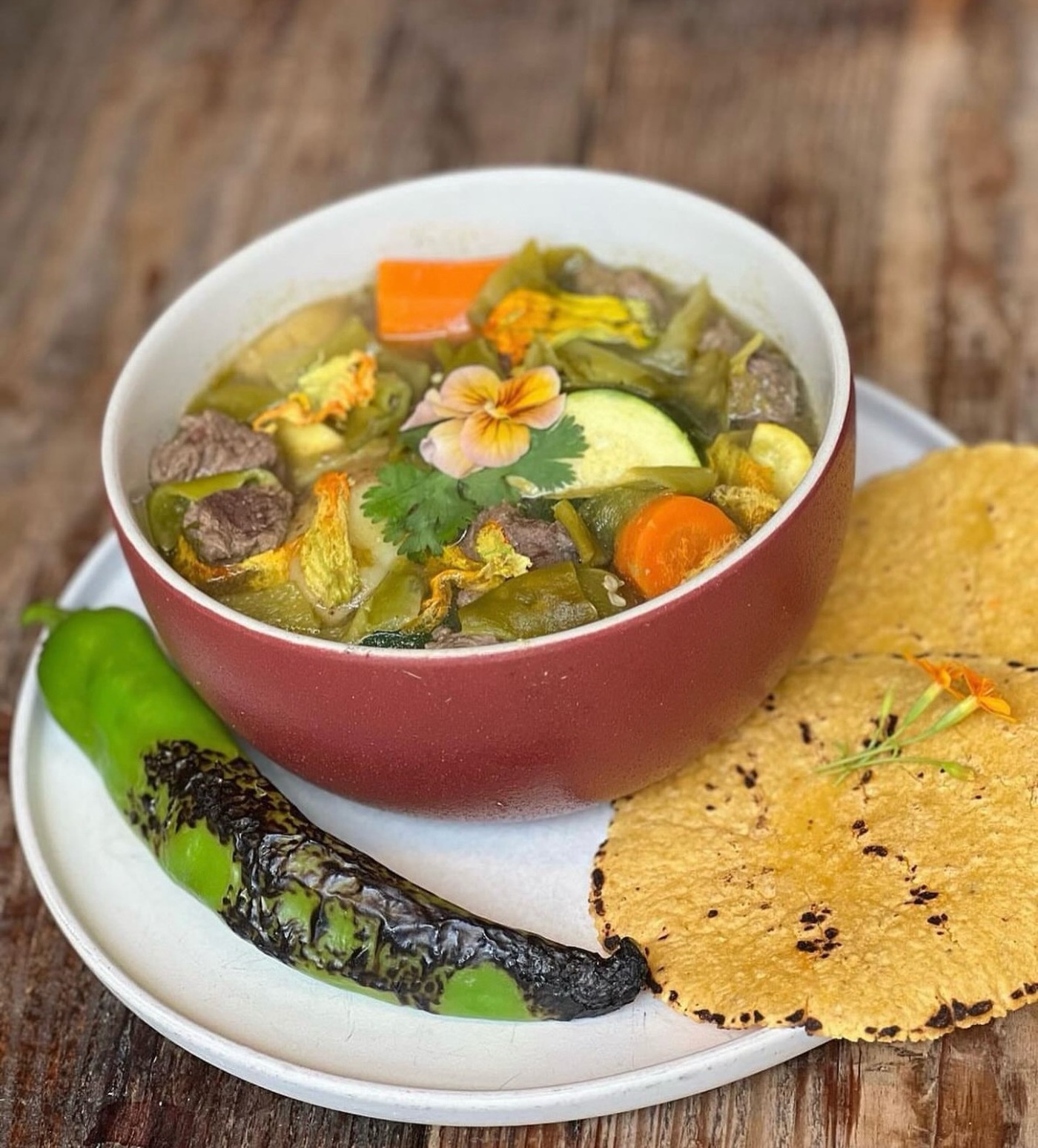
The seasonal menu gives plant-based dishes real space alongside game. Consider the Three Sisters vegetable bowl or mushrooms with pumpkin seed mole, then compare those flavors with a bison dish if you eat meat. The photographed Hatch green chile bison stew is an example of a seasonal offering; confirm it is available instead of arriving with one fixed order in mind.
Check the reservation instructions for your party size, especially for more than 10 people, and include children when counting seats. The kitchen warns about allergens including nuts. A dish described as Indigenous or plant-based is not automatically suitable for a particular allergy, so ask about the complete preparation before ordering.
3. Tocabe — Denver, Colorado
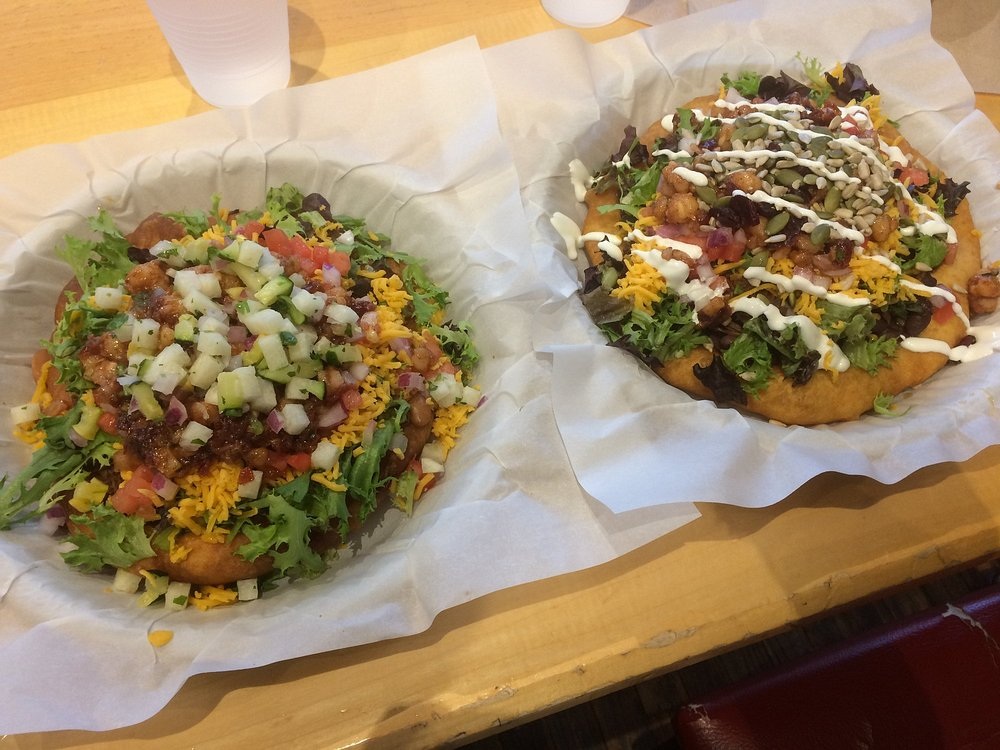
Tocabe’s North Denver restaurant, at 3536 West 44th Avenue, is an approachable choice when you want a full meal without organizing a formal dinner. Its counter-service format lets you choose a base, protein and toppings, making it useful for a group with different appetites.
A frybread taco puts the bread at the center of the meal. A Posu bowl offers another direction, with wild rice or a quinoa-and-wheatberry blend, beans, vegetables and your chosen protein. Bison appears in several preparations; the bison ribs with berry barbecue sauce are limited daily, so treat them as a possibility rather than a guaranteed order.
Pay attention to the grain choice if you avoid gluten: wheatberries contain wheat. Ask about the whole dish and shared preparation, rather than relying on the appearance of a rice bowl. The flagship is closed Mondays. There is also a Denver airport outlet, but its location and offering should not be confused with this neighborhood restaurant. The flagship lists a step-free entrance and accessible restroom; contact the staff about any more specific access needs.
4. Indian Pueblo Kitchen — Albuquerque, New Mexico
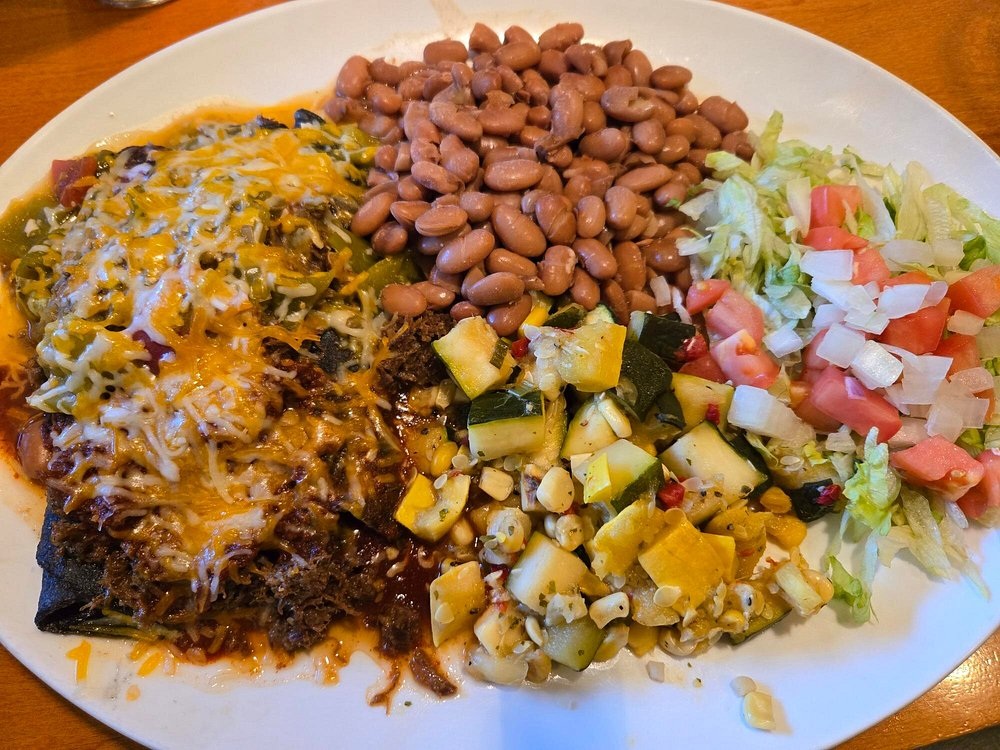
Pair lunch with a visit to the Indian Pueblo Cultural Center, which is owned and operated by New Mexico’s 19 Pueblos. Indian Pueblo Kitchen is inside the center at 2401 12th Street NW, and currently serves daily from 9 a.m.–5 p.m. The restaurant and museum are separate parts of the visit; plan museum admission if you want to explore the exhibitions as well as eat.
Blue corn enchiladas are a good choice for seeing familiar Southwestern ingredients through this kitchen’s preparation. For another direction, look at the stews and breads: the current menu includes Pueblo green chile stew with pork, red chile posole with beef, and elk chili served with blue cornbread. Those distinctions matter if you avoid a particular meat. “Green chile” describes an ingredient, not a vegetarian promise.
Allow a generous gap between lunch and any scheduled museum activity. If you later visit a Pueblo community, read the center’s visitor guidance first; public restaurant access does not grant access to homes or ceremonies. Our New Mexico green chile guide can help you plan other meals around the state.
5. Mitsitam Native Foods Cafe — Washington, DC
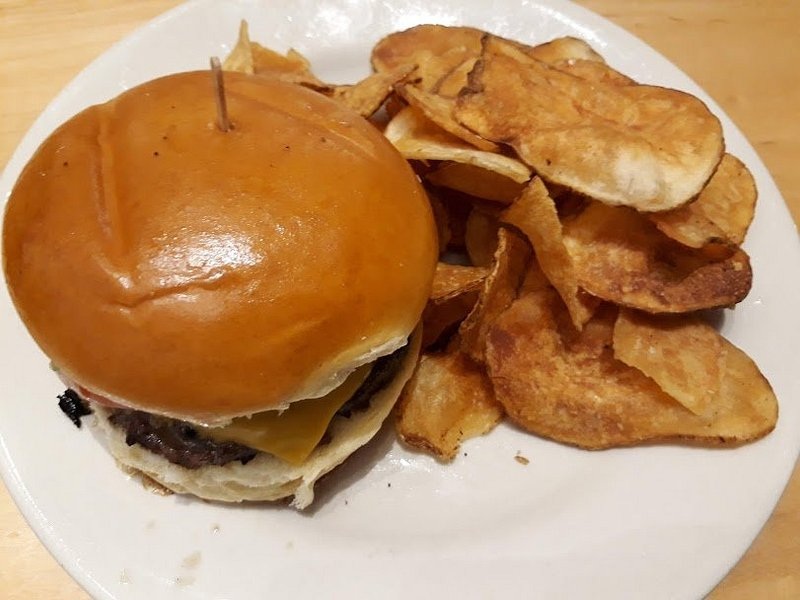
At the Smithsonian’s National Museum of the American Indian, Mitsitam Native Foods Cafe makes lunch part of a broader day of learning. Its regional approach spans Indigenous food traditions across the Americas, so do not read the menu as representing one nation or a single uniform cuisine.
The current selection includes Three Sisters stew, wild rice salad, bison offerings and frybread tacos. Look across the stations before committing to a tray: a vegetable side or grain dish can show you something different from ordering another burger. The photographed bison burger is one example of the café’s more familiar preparations.
This is museum café dining rather than a chef-led tasting session, and the institution is not the same kind of business as the independently Native-owned restaurants elsewhere in this list. Current café hours are 11 a.m.–4 p.m.; an afternoon museum visit can easily run past lunch service if you leave eating until last. Smithsonian’s dining page also identifies a shared kitchen and multiple allergens, so ask staff about preparation before selecting a dish.
6. Off the Rez Cafe — Seattle, Washington
For a fixed stop rather than a moving food truck, head to Off the Rez Cafe at the Burke Museum, 4303 Memorial Way NE. You do not need museum admission to eat at the café. Its current schedule is Tuesday–Sunday, 10 a.m.–5 p.m., making it a daytime University District stop.
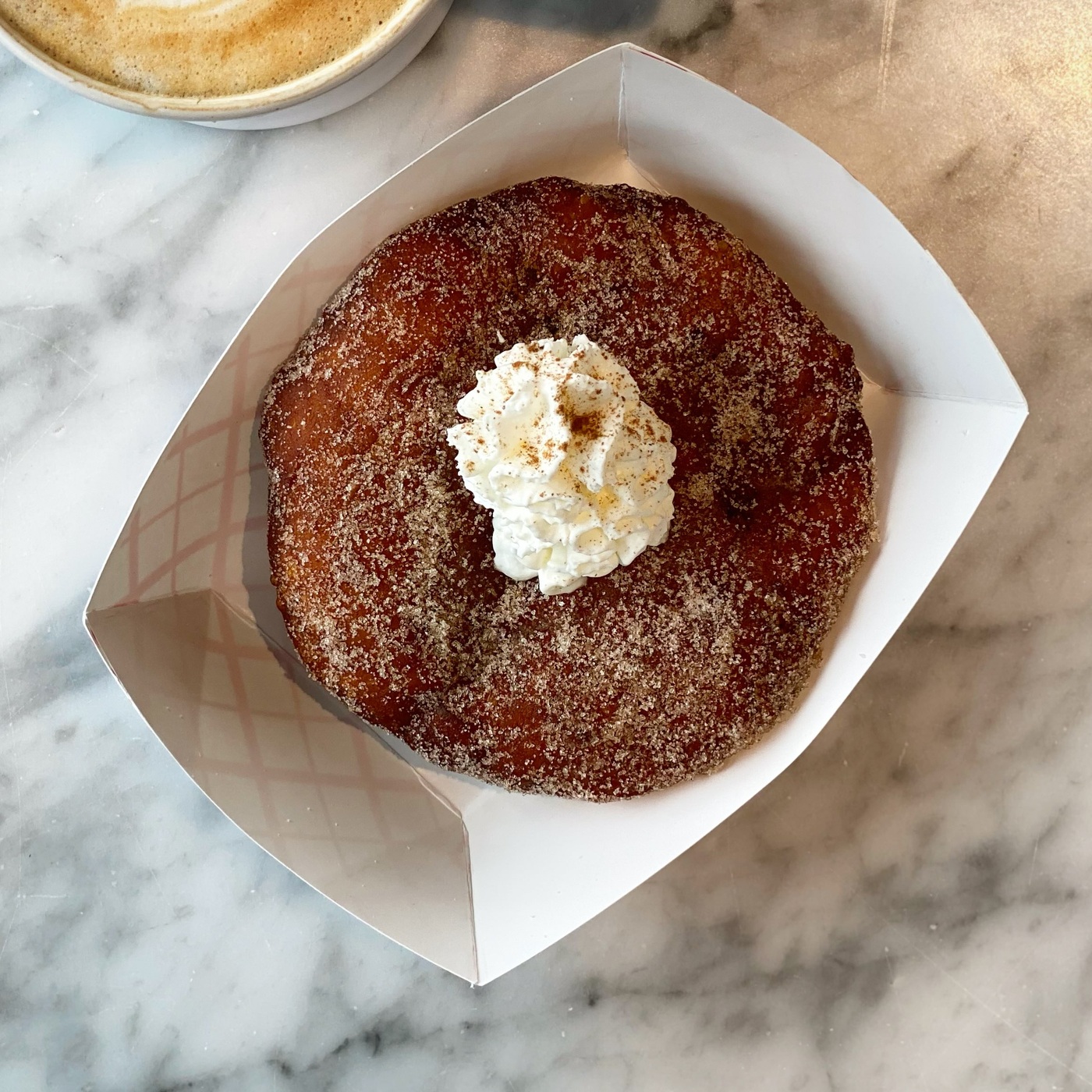
Frybread is central to the business, with both savory and sweet preparations. Order a taco if you want a meal built around it, or ask about the current wild rice bowl for a different base. Sharing a savory order and a sweet frybread is a practical way for two people to sample different preparations without each ordering a second full meal.
The pumpkin frybread pictured here is an October special, not a year-round promise. The food truck has its own changing calendar and sometimes serves inside ticketed events. Check whether a listing refers to the café, a public truck stop or an event before setting out; the same business name does not mean identical access everywhere.
7. Indigenous Eats — Spokane, Washington
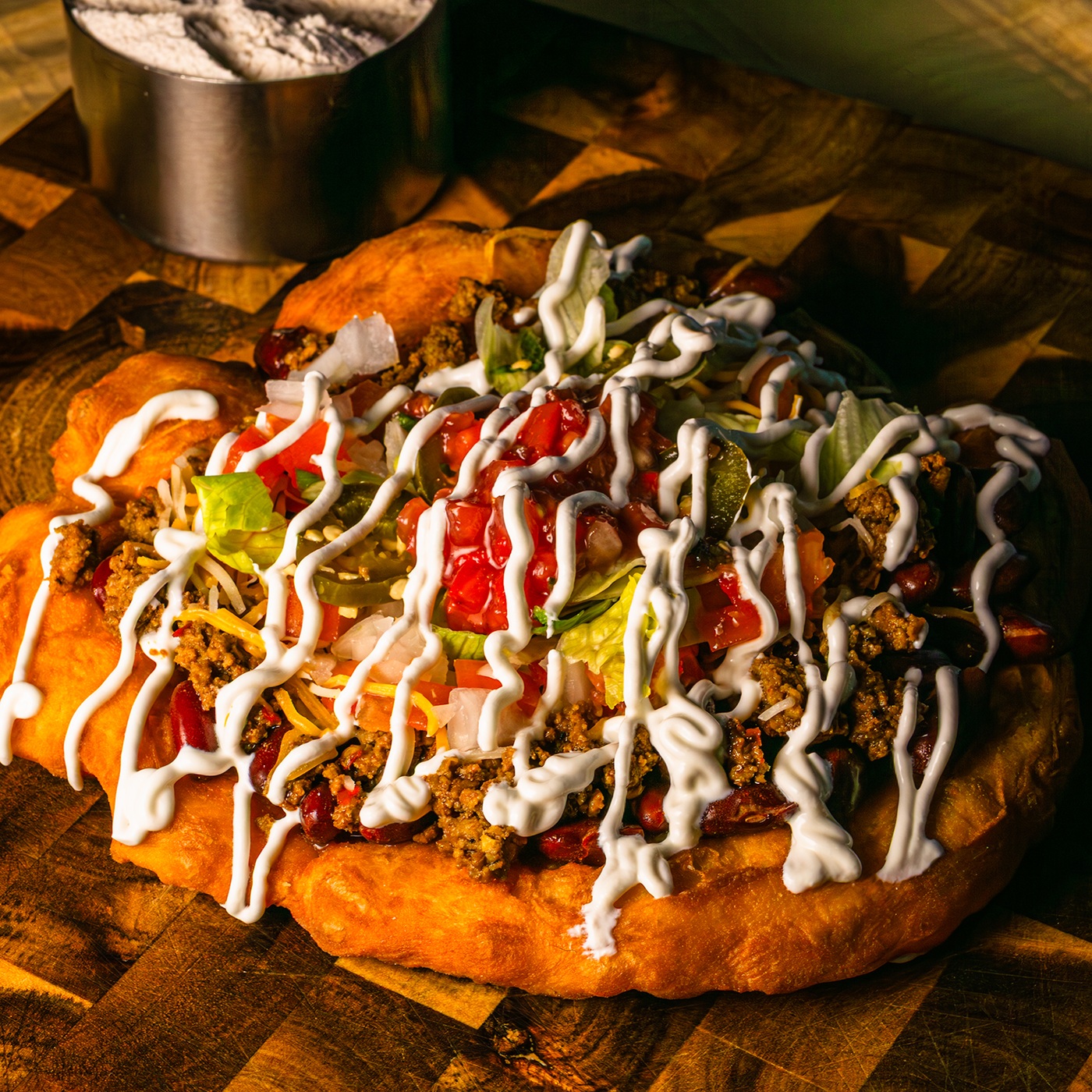
Indigenous Eats describes its food as contemporary Native American comfort food. That is the right expectation for its frybread tacos, burgers, soups and huckleberry dessert, rather than expecting every ingredient to predate European contact.
The Hunter taco combines sage-seasoned ground bison with black beans, vegetables, tomatillo salsa, cheese and sour cream. The Rancher, pictured here, uses ground beef and chili beans. A Gatherer taco offers a vegetarian direction, while frybread with huckleberry sauce makes a dessert to share. Check ingredients even with the vegetarian option: the published menu says the frybread itself contains flour, egg and dairy.
Pick the location that matches your day. The original Boone restaurant is at 829 East Boone Avenue, Suite E, and closes Tuesdays. The downtown outlet is on the third floor of River Park Square, 808 West Main Avenue, FC-5, and has a different schedule. Specify the branch when arranging a pickup or meeting friends; otherwise you can end up waiting at opposite ends of the plan.
8. 39 Restaurant — Oklahoma City, Oklahoma
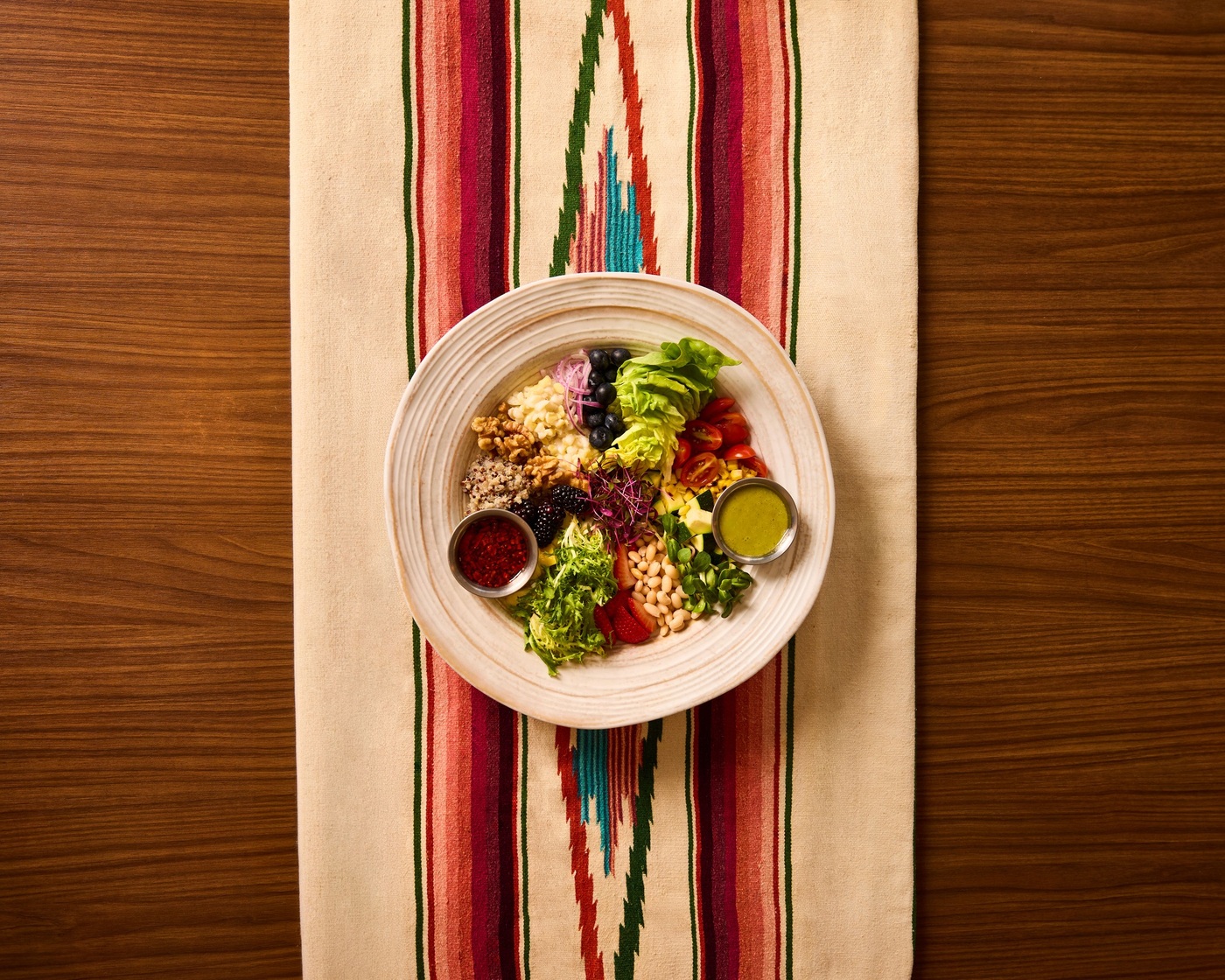
The name 39 Restaurant refers to the 39 First American nations in Oklahoma today. At First Americans Museum, 659 First Americans Boulevard, the restaurant pairs contemporary presentation with ingredients Indigenous to the Americas. Avoid assuming all those nations have the same food traditions or originated in Oklahoma.
The published lunch menu offers useful starting points: wild rice fritters with pumpkin seed sauce, venison chili, a mushroom-and-tepary-bean pumpkin seed mole, and the Three Sisters bowl pictured here. The bowl combines quinoa, squash, corn, tepary beans, greens and seasonal additions. If you are choosing between dishes, ask which ingredients and preparations the staff most want to highlight that day.
Match your reservation to the service. Lunch currently runs Wednesday–Friday, weekend brunch has its own hours, and dinner is Friday–Saturday. Do not arrive for a weekday dinner based solely on the museum’s opening calendar. The lunch menu says substitutions and modifications cannot be accommodated and asks guests to disclose severe allergies before dining. Discuss requirements before reserving, rather than assuming a chef can change a dish on arrival.
9. KAI — Gila River Indian Community, Arizona
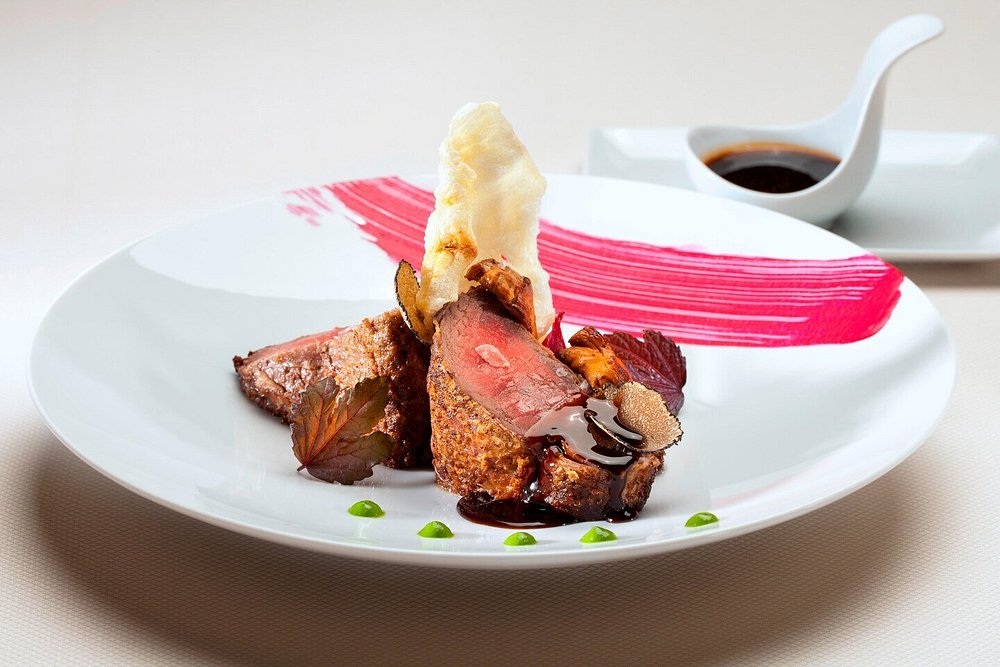
Choose KAI for an evening built around dinner. Located at Sheraton Grand at Wild Horse Pass, 5594 West Wild Horse Pass Boulevard, it honors Akimel O’otham and Pee Posh heritage while using global culinary influences. Its approach differs from a kitchen that excludes all introduced ingredients.
The published seven-course tasting menu asks diners to make choices within four of the courses. One current bison preparation brings together cholla bud, scarlet runner beans and saguaro blossom syrup; other selections include ingredients such as dairy and wheat. The elk loin photograph illustrates an earlier seasonal presentation and does not guarantee that dish on your visit.
At the time checked, the menu lists $195 per person, or $350 with wine pairing. Confirm the current price, supplements, taxes, gratuity and service date before booking. Leave the evening open rather than putting another timed attraction immediately afterward. Dietary restrictions must be raised at reservation time, and the restaurant explicitly says it cannot accommodate every restriction or allergy.
10. Fry Bread House — Phoenix, Arizona
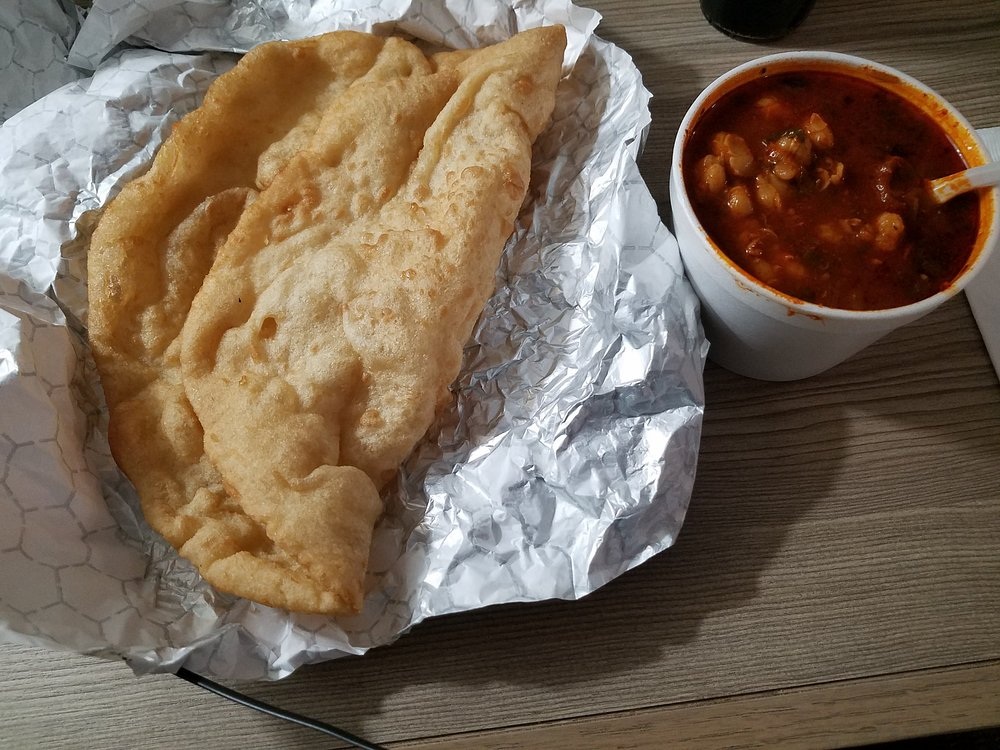
At 4545 North 7th Avenue, Fry Bread House offers a straightforward way to make a fresh frybread meal part of a Phoenix day. Current hours run Monday–Saturday, 11 a.m.–8 p.m.; Sunday is a closure to plan around.
Decide whether you want the bread loaded as a taco or alongside a stew. A savory taco becomes a complete meal, while a bowl of pozole with bread lets you taste the two separately. Sweet preparations offer another option if you are stopping after lunch elsewhere. Order to suit your appetite instead of treating a full taco and a dessert portion as a compulsory combination.
Frybread has a complicated history tied to dispossession, reservation life and government rations, as outlined by the Oregon Historical Society. Its meaning and place in contemporary Native communities vary. Enjoying it need not mean presenting it as the sole Native food or a universal pre-contact staple. The restaurant advises allowing preparation time for made-to-order pickup food; leave a buffer if collecting lunch before a drive.
11. A Navajo-guided dinner tour — Monument Valley, Utah–Arizona
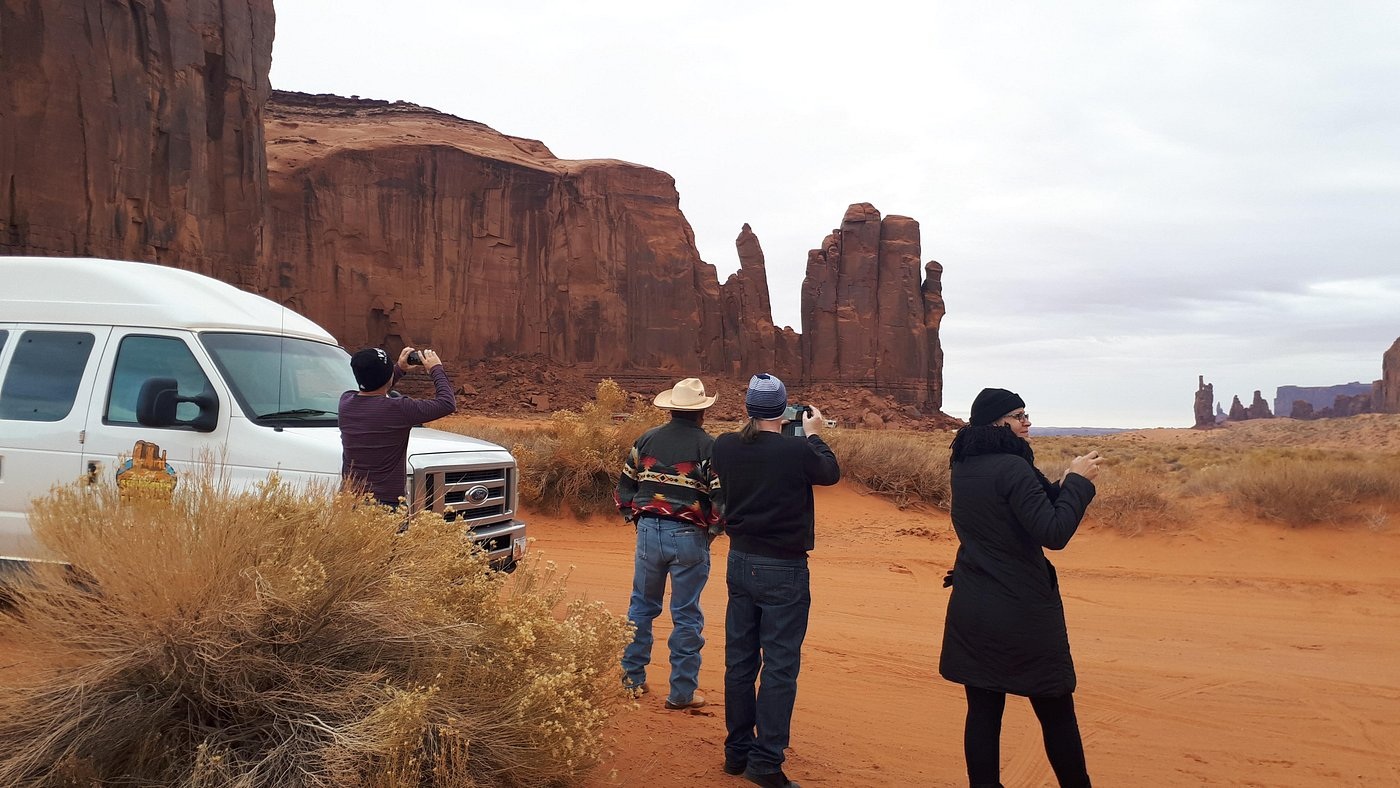
For an experience with a meal woven into a longer visit, consider the four-hour Dreamcatcher evening from Simpson’s Trailhandler Tours, a Navajo-owned and operated business. The operator describes backcountry sightseeing followed by Navajo tacos at the Rain God Mesa picnic area and campfire performances.
Book the dinner experience specifically: a shorter sightseeing tour from the same company does not automatically include food. The operator says it cannot accept same-day reservations. Ask about your date, minimum participation, vehicle type and mobility requirements before committing, especially if uneven roads or boarding an open-air vehicle are concerns.
Confirm the meeting point and use Navajo Nation local time on your confirmation. During daylight saving time it is an hour ahead of the Arizona time used in Page and Flagstaff. Bring a layer for the evening, secure loose items and follow the guide’s instructions about photography and permitted access. The marketplace listings mention dietary options, but confirm the actual substitute meal and preparation directly for your requirements. Check the current Tribal Park entry charge and whether it is included; listing text still carries an older fee alongside a proposed 2026 change.
Both buttons below refer to this company’s four-hour cultural dinner experience. Availability depends on date; the Expedia listing showed no matching offer for the date checked.
Check the Navajo Dinner Tour on Expedia
Check Dinner Tour Dates on GetYourGuide
What do the menu descriptions mean?
Three Sisters refers to corn, beans and squash, although a restaurant may add grains, greens or a particular protein to its own dish. Read the full description rather than expecting every Three Sisters bowl to be identical. Contemporary Native cooking can include both inherited foods and introduced ingredients; decolonized cooking describes a more specific ingredient approach, illustrated here by Indígena.
For budgeting, compare the linked current menus before choosing a stop. A counter-service meal, a tasting menu and a four-hour guided outing buy very different experiences. With a tour, confirm the meal, transport, entry charges and cancellation terms together; with museum dining, check what your museum ticket actually covers.
How to make the most of your meal
Choose one anchor experience. Reserve KAI or Indígena before organizing an evening around it, make Wahpepah’s a lunch priority, and give the Monument Valley tour its own afternoon and evening. The suggested pacing here is planning advice, not a promised service duration.
Let the business explain its own food. Menus can reflect one nation, several communities, a chef’s family and training, or a wider Indigenous food network. Ask about an ingredient or producer when staff have time. Avoid treating a server as a representative of every Native culture or assuming one meal gives access to private cultural practices.
Ask precise dietary questions. Discuss stocks, sauces, bread, nuts and shared preparation. At 39, for example, the current heirloom beans include smoked turkey and the hominy uses duck fat. Plant ingredients in a dish name do not tell you its full recipe. Our guide to travel with food allergies offers a broader planning framework.
Keep cultural access separate from restaurant access. Ask before photographing people, obey posted rules and use a community’s own visitor information for anything beyond the dining room. Buying a meal supports the business you chose; taking time to understand its particular approach makes that meal more memorable.