
This article contains affiliate links. We may earn a commission if you book through them, at no extra cost to you.
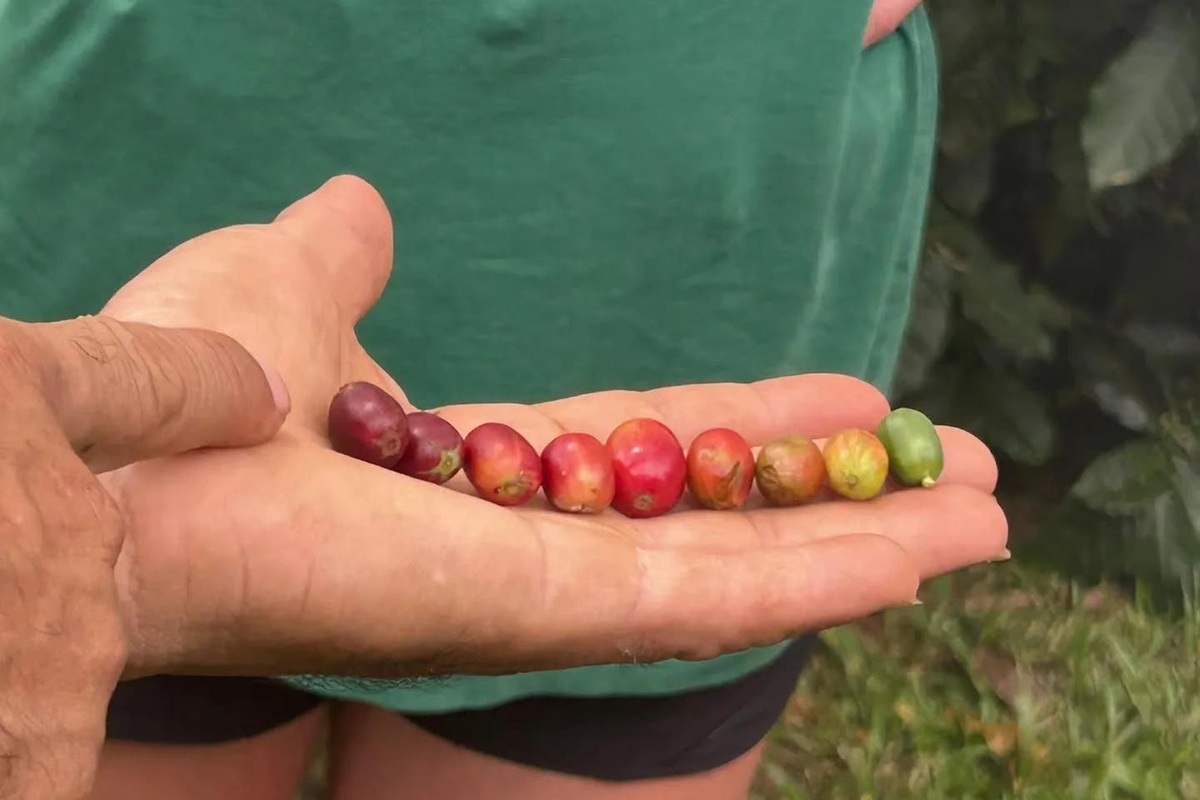
A coffee farm visit changes the scale of a Puerto Rico vacation. Instead of choosing another stretch of sand, you spend part of the day looking closely at a coffee cherry, following the work that separates fruit from seed, and tasting what that work produces. The reward is more than a different view: it is a much better understanding of what is in your cup.
The best Puerto Rico coffee farm tours for your trip depend on where you are staying, how much walking you want to do, and whether you want a working farm, a historic estate or a guided tasting. These 11 options include all three. They are choices for different days and different travelers, not an island-wide checklist to squeeze into one vacation. Discover Puerto Rico’s coffee-hacienda guide is a useful introduction to the island’s established coffee destinations.
Details checked October 25, 2026. Use the linked operators to confirm your date, language and meeting point before setting out. A café being open does not necessarily mean a farm tour is running.
On this page16
Choose the coffee experience that fits your day
| Experience | Town | Best reason to choose it | Booking distinction |
|---|---|---|---|
| Hacienda Muñoz | San Lorenzo | A short guided walk plus a café or meal | Direct tours are walk-in; organized excursions book separately |
| Hacienda Encanto Natural | San Lorenzo | A choice of tour depth or tasting alone | Arrange the specific experience in advance |
| Hacienda Moraica | Orocovis | An educational visit with labeled crops | Check announced guided-tour dates |
| Hacienda La Tradición | Utuado | Seasonal coffee cultivation and processing | Match the ticket to the seasonal experience |
| Hacienda San Pedro | Jayuya | A farm café visit with an established coffee producer | Confirm a guided tour separately from café hours |
| Hacienda Tres Ángeles | Adjuntas | A longer plant-to-cup tour | Saturday tour by prior reservation |
| Sandra Farms | Adjuntas | Coffee, chocolate and agricultural recovery | Reserve a tour; discuss mobility needs directly |
| Hacienda Lealtad | Lares | A restored estate and its social history | Book the historical tour |
| Hacienda Iluminada | Maricao | Visiting the farm behind 787 Coffee | Reserve a dated departure |
| Hacienda Buena Vista | Ponce | Historic machinery, water and landscape | Choose a Para la Naturaleza program |
| Hacienda de Café Pomarrosa | Ponce | A private group or special-event visit | Appointment only; no public walk-ins |
1. Hacienda Muñoz, San Lorenzo: an approachable first farm tour
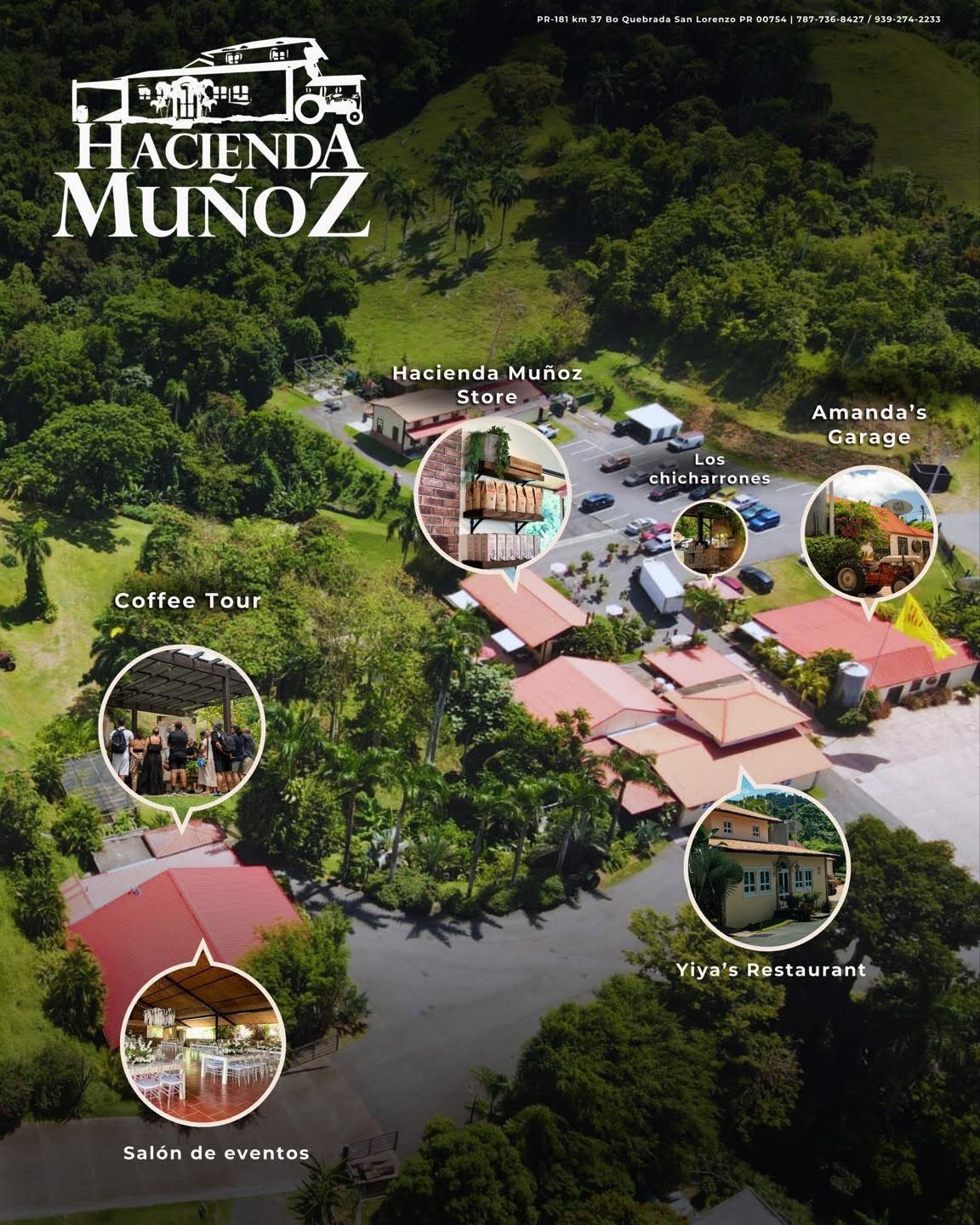
Muñoz makes sense when you want a clear introduction to coffee without committing to a long specialist workshop. Its guided walk takes about 75 minutes, covers the plants and processing machinery, and finishes with a small tasting. The coffee store and Yiya’s Restaurant give you ways to extend the visit afterward.
The farm’s visitor FAQ lists Friday–Sunday tours: 10 a.m. in English, then noon and 2 p.m. in Spanish. Direct visits are first-come, first-served, and the farm recommends arriving 45–60 minutes early. Its hillside route is unsuitable for strollers and wheelchairs. Free entrance and parking should not be confused with the paid guided tour.
For a day with transport, GetYourGuide’s Puerto Rico Coffee Plantation & Waterfall River Tour names Muñoz in its itinerary. It meets at DISTRITO T-Mobile in San Juan, includes an air-conditioned vehicle and the Friday–Sunday plantation mini-tour, and continues to a river stop. Bottled water is included; meals and other drinks are extra. Confirm your departure date and the farm walk’s inclusion before booking; this is a longer excursion, not a farm-admission ticket or automatic hotel pickup.
Check Muñoz Tour with Transport
2. Hacienda Encanto Natural, San Lorenzo: choose how deeply to explore
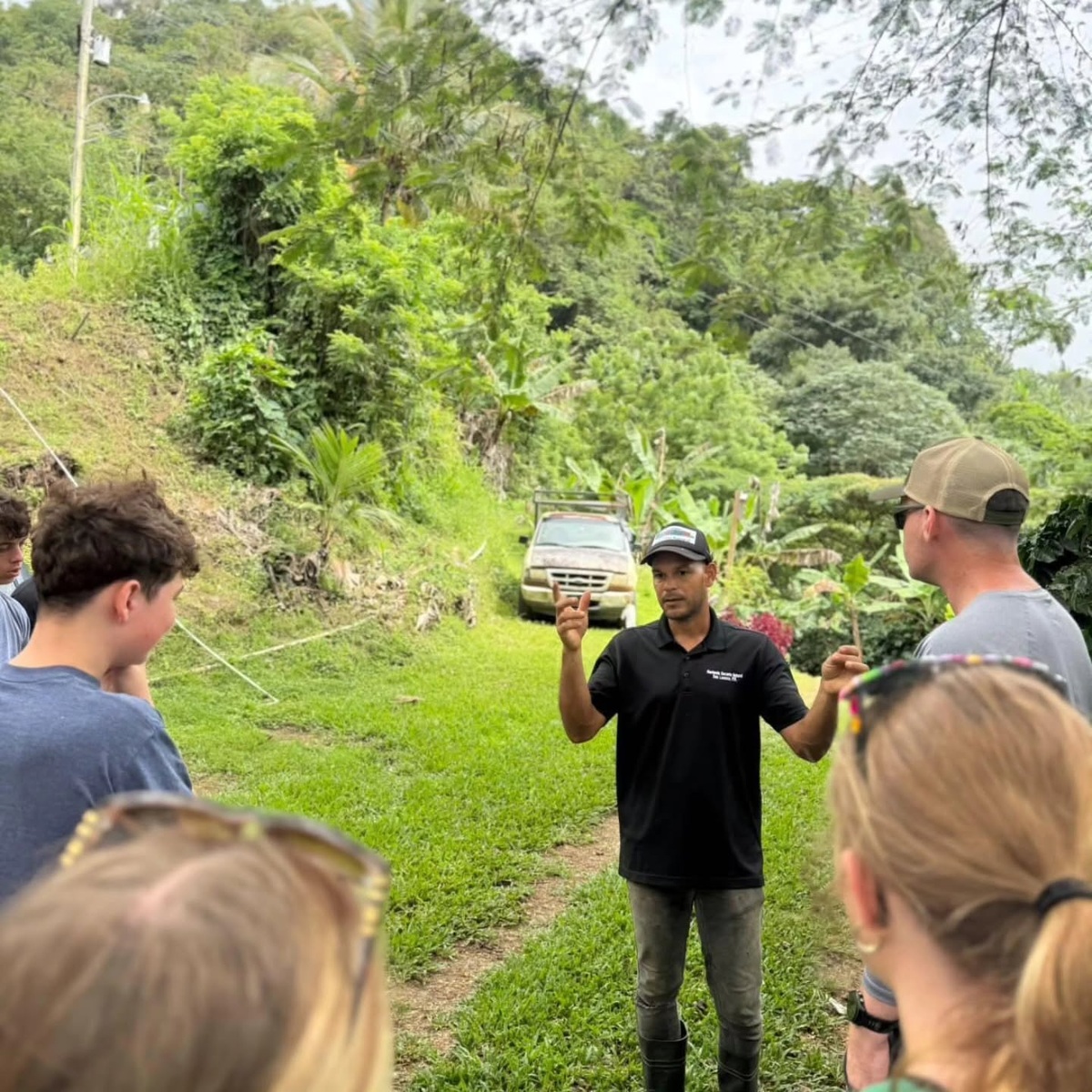
Encanto Natural is useful for a mixed-interest group because its official experience menu separates a short introductory tour, a fuller farm tour and a guided coffee tasting without the tour. That lets you decide whether your priority is walking the property or spending time with the finished drink.
The farm also grows crops such as plantains, bananas and root vegetables, giving the visit an agricultural context beyond coffee alone. Ask which parts of the production process you will see on your date, and whether the tasting compares several coffees or explains one coffee in depth. Those are different experiences, even if both are described as a tasting.
Coordinate the visit before driving into the San Lorenzo mountains. The published reservation policy requires full payment and states that sales are final, so read the current cancellation and rescheduling terms before paying. A tasting-only booking may reduce walking, but confirm access from the parking area rather than assuming it is step-free.
3. Hacienda Moraica, Orocovis: a more structured coffee lesson
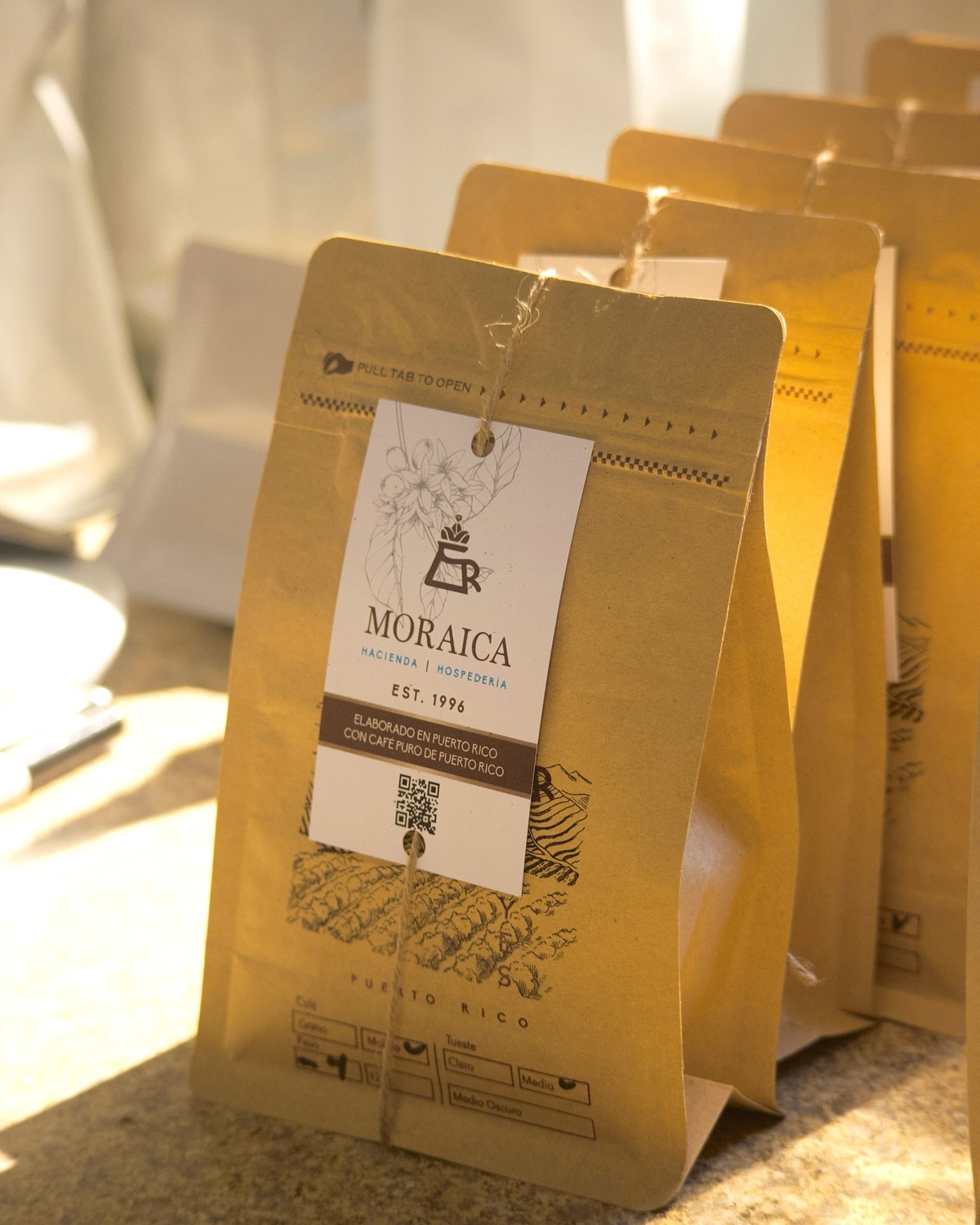
Moraica’s activities page describes a 90-minute guided tour through stages of coffee production, with information on coffee varieties and the surrounding flora. Labeled crops help connect what you are hearing to the plants in front of you. This is a good option if you want to leave knowing more than the difference between a latte and an espresso.
The estate also advertises self-paced educational experiences using videos. Check which format is available: a self-guided visit does not promise the same discussion, demonstrations or access as a scheduled guided tour. Upcoming dates are announced through the operator’s channels.
For enthusiasts, Moraica describes a separate coffee camp with workshops and overnight elements. Treat that as a distinct event to inquire about, not something included in the ordinary tour. For a straightforward day trip, reserve the guided visit first and only then plan food or other stops around it.
4. Hacienda La Tradición, Utuado: let the season shape the visit
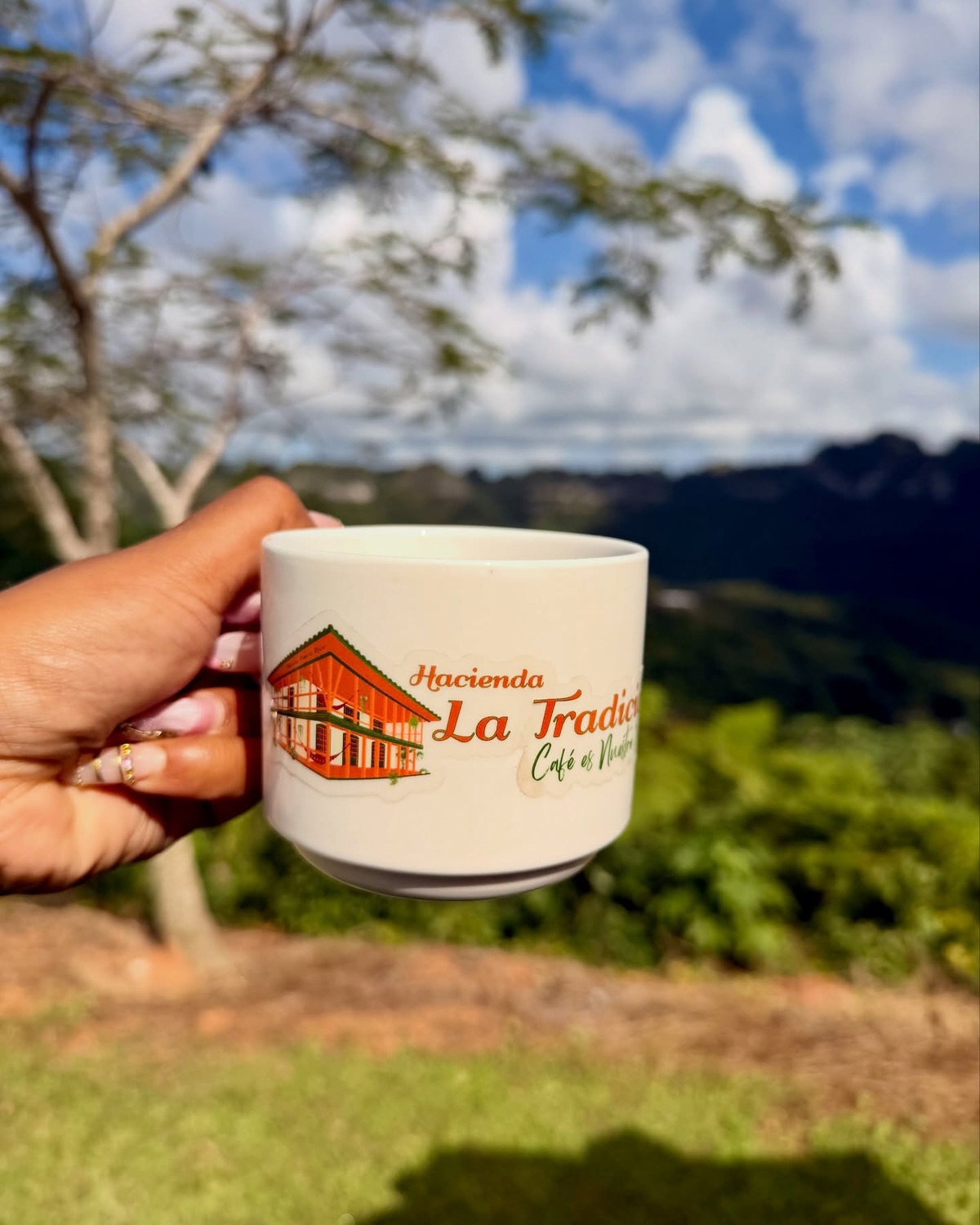
At La Tradición in Barrio Don Alonso, the most useful choice is between the actual experiences on sale. Its tour menu distinguishes Harvest & Heritage from the hands-on Tradicional Coffee Harvest experience, Bloom & Grow, and separate outdoor adventures. Do not assume that any ticket includes picking cherries, hiking to waterfalls and a full meal.
The Expedia Harvest and Heritage Coffee Tour listing is an approximately 75-minute visit focused on the farm’s coffee, cultivation and processing, with brewed coffee, a light snack and water. Its meeting point is Dulce Jíbara LLC on PR-140 in Utuado. Arrange your own journey there unless the particular package explicitly adds transport.
If picking is the main reason for your trip, ask whether ripe fruit is available and which ticket lets you participate. Watching a demonstration and collecting your own cherries are not interchangeable. Reserve the experience that matches your interest instead of relying on the broad phrase “coffee tour.”
5. Hacienda San Pedro, Jayuya: coffee at its mountain home
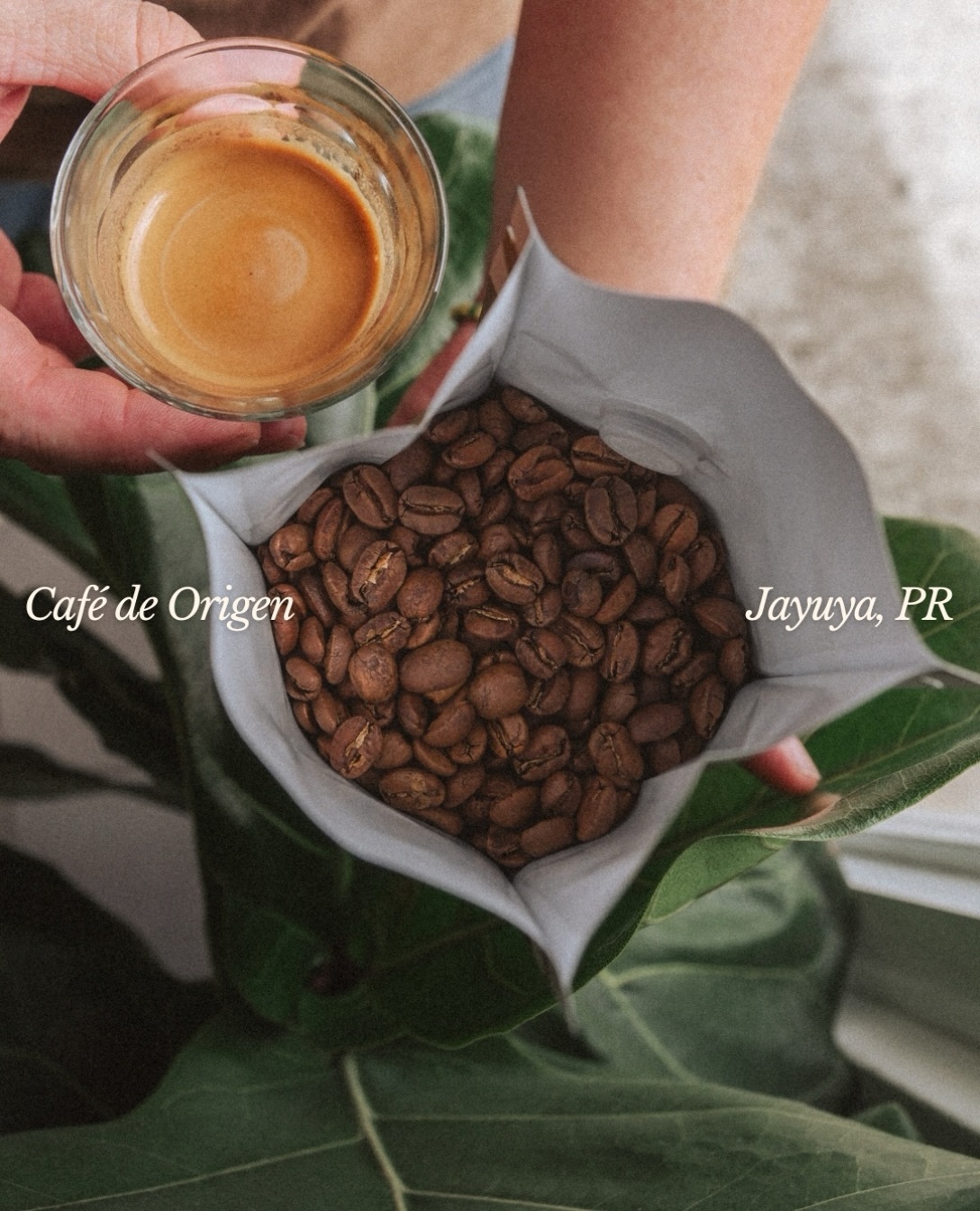
San Pedro is worth considering if you want to drink a producer’s coffee in Jayuya rather than at one of its metropolitan coffee shops. The official locations page separates the Jayuya farm café from its other branches, an important detail when entering a destination into your map app.
Its posted Jayuya café hours are Thursday–Friday, noon–5 p.m., and Saturday–Sunday, 10 a.m.–5 p.m. Treat those as café hours: they do not establish that a guided plantation visit starts whenever you arrive. Contact the hacienda to confirm tour availability, language, duration and access before making the drive specifically for a tour.
This is a good stop for travelers who would be happy with coffee and a quieter pause even if a walk is unavailable. Compare a simple espresso or brewed coffee with your usual milk drink, then ask about the beans and roast you enjoyed before buying a bag. Check the grinder requirements for your home setup if purchasing ground coffee.
6. Hacienda Tres Ángeles, Adjuntas: reserve a substantial plant-to-cup visit
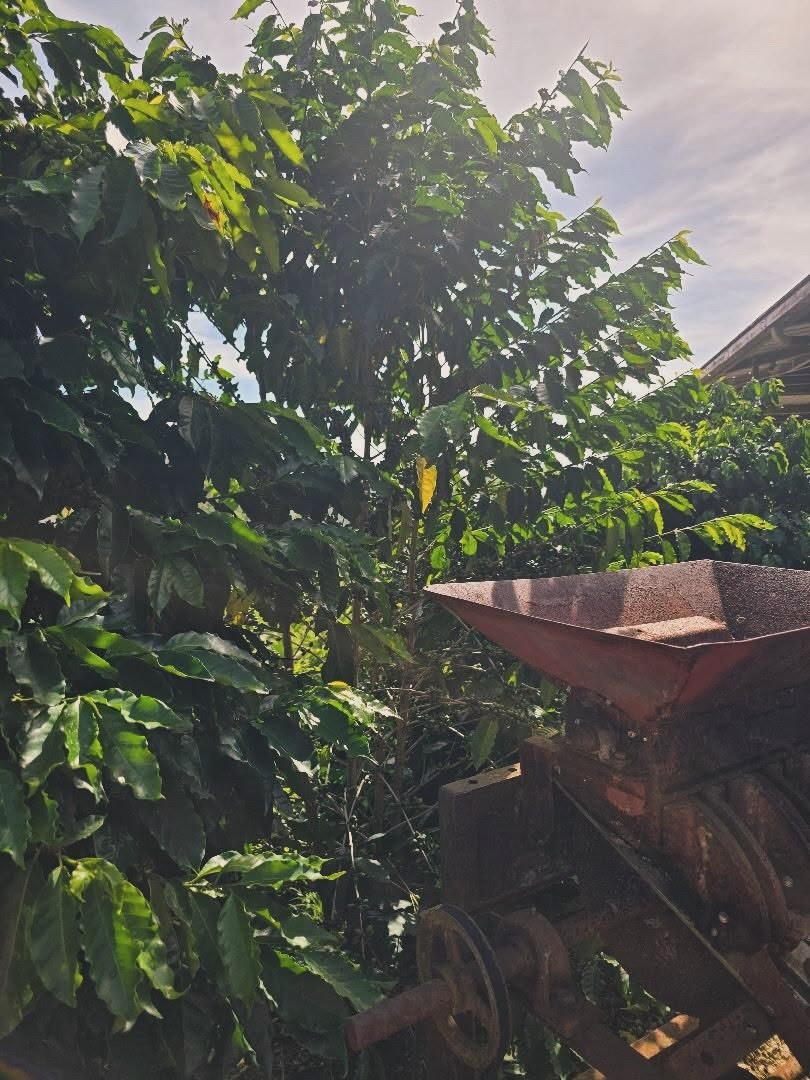
Tres Ángeles offers a more substantial outing than a quick café stop. Its official tour description sets out a roughly two-and-a-half-hour visit through the coffee plantings and processing facility, ending with coffee and a house dessert.
The published departure is Saturday at 10 a.m., by prior reservation. Call to secure the visit and confirm the language you need; do not assume that an English-language tourism listing means every departure is in English. The booking number is 787-360-0019.
Allow the tour to be the main event of the morning. A second tightly timed reservation elsewhere in the mountains can turn the tasting into a clock-watching exercise. If anyone in your party needs a shorter walk, ask about terrain and alternatives before reserving. Visiting the restaurant or coffee shop is a separate plan from joining the farm tour.
7. Sandra Farms, Adjuntas: coffee with a chocolate connection
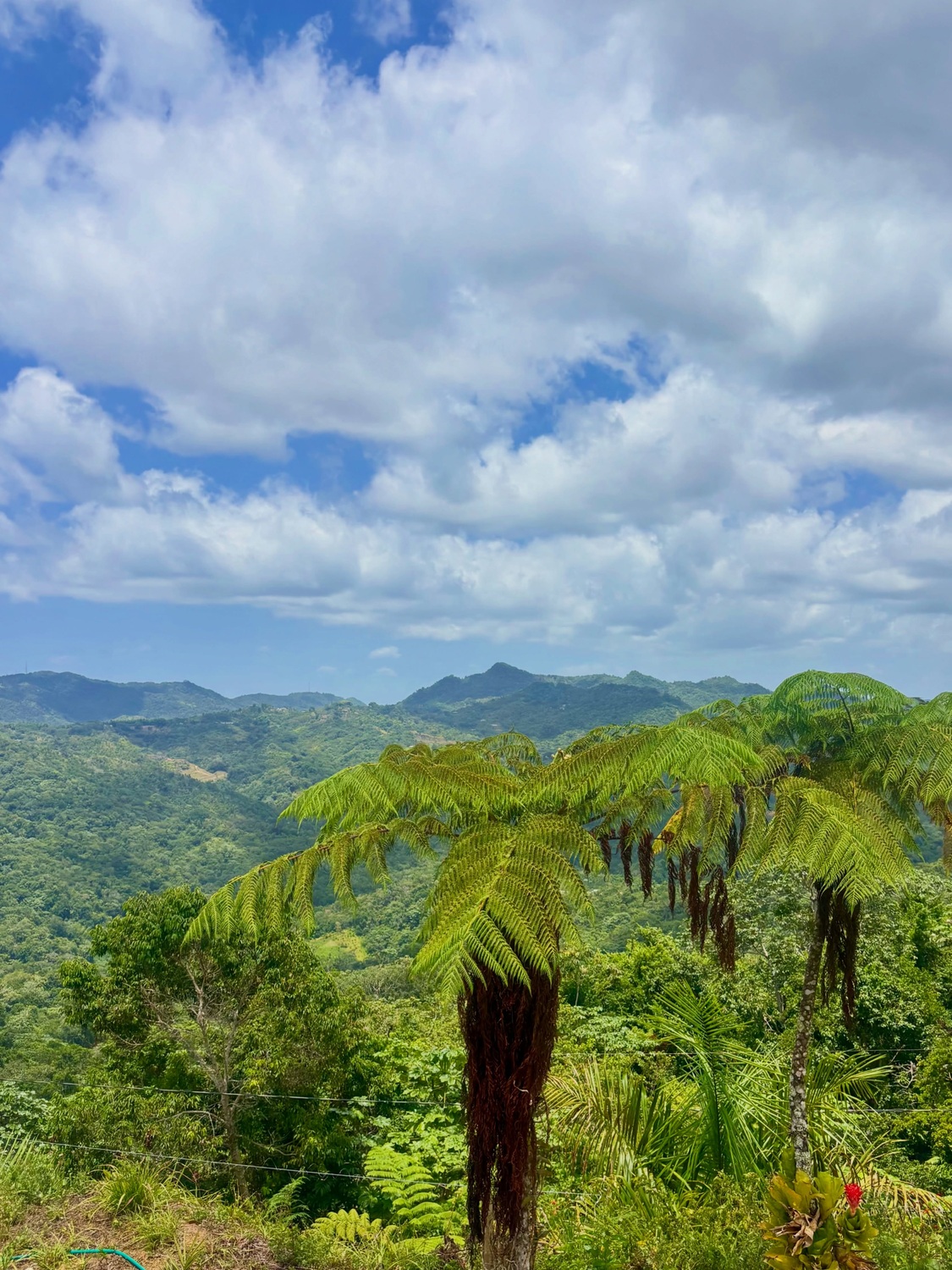
Sandra Farms combines coffee production with a tasting of its specialty dark chocolate, making it particularly appealing when your group includes someone more excited by cacao than espresso. The farm’s tour page describes the coffee-growing and processing story, native and tropical plants, and how the property has recovered and adapted after hurricanes.
The listed tour windows are Tuesday–Sunday, 11 a.m.–1 p.m. and 2–4 p.m. Reserve rather than treating these as a guarantee of space. Ask for the recommended approach road and parking instructions, especially if you are unfamiliar with driving in the interior.
There is walking, but the operator says it can accommodate visitors with mobility restrictions. Discuss your particular needs directly, including distances, steps and seating. Optional forest hikes are a separate consideration: the farm describes moderate-to-strenuous trails, which should not be mistaken for the walking required on the standard coffee visit.
8. Hacienda Lealtad, Lares: understand the people behind the estate
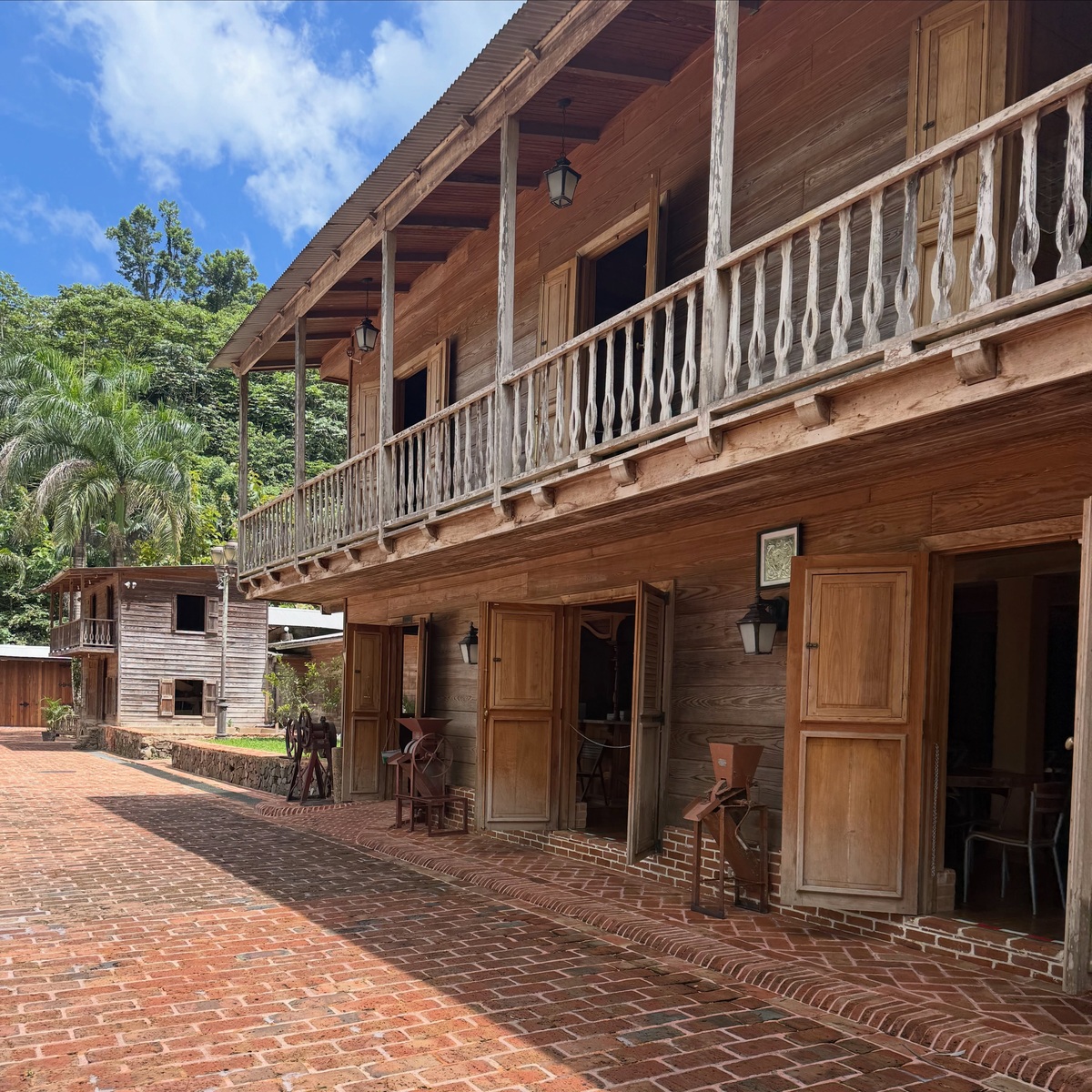
Lealtad is an especially good fit for travelers interested in architecture and social history. The current historical tour visits a restored nineteenth-century coffee estate, including the owners’ house, former quarters of enslaved people, and spaces where coffee was collected and processed. The route also includes a walk toward the river.
That history deserves attention alongside the handsome wooden buildings. Ask how the estate’s labor system worked and what the surviving structures reveal about everyday life. A photograph of a courtyard tells only a small part of the story.
Book the historical tour on its own terms. Do not assume it includes a detailed modern roasting demonstration, a laboratory cupping or a restaurant meal unless your selected ticket says so. Confirm the check-in location and footwear advice, and allow extra time if you want to eat afterward. Choose Lealtad for a history-led coffee-country visit rather than expecting a technical barista class.
9. Hacienda Iluminada, Maricao: visit the farm behind 787 Coffee
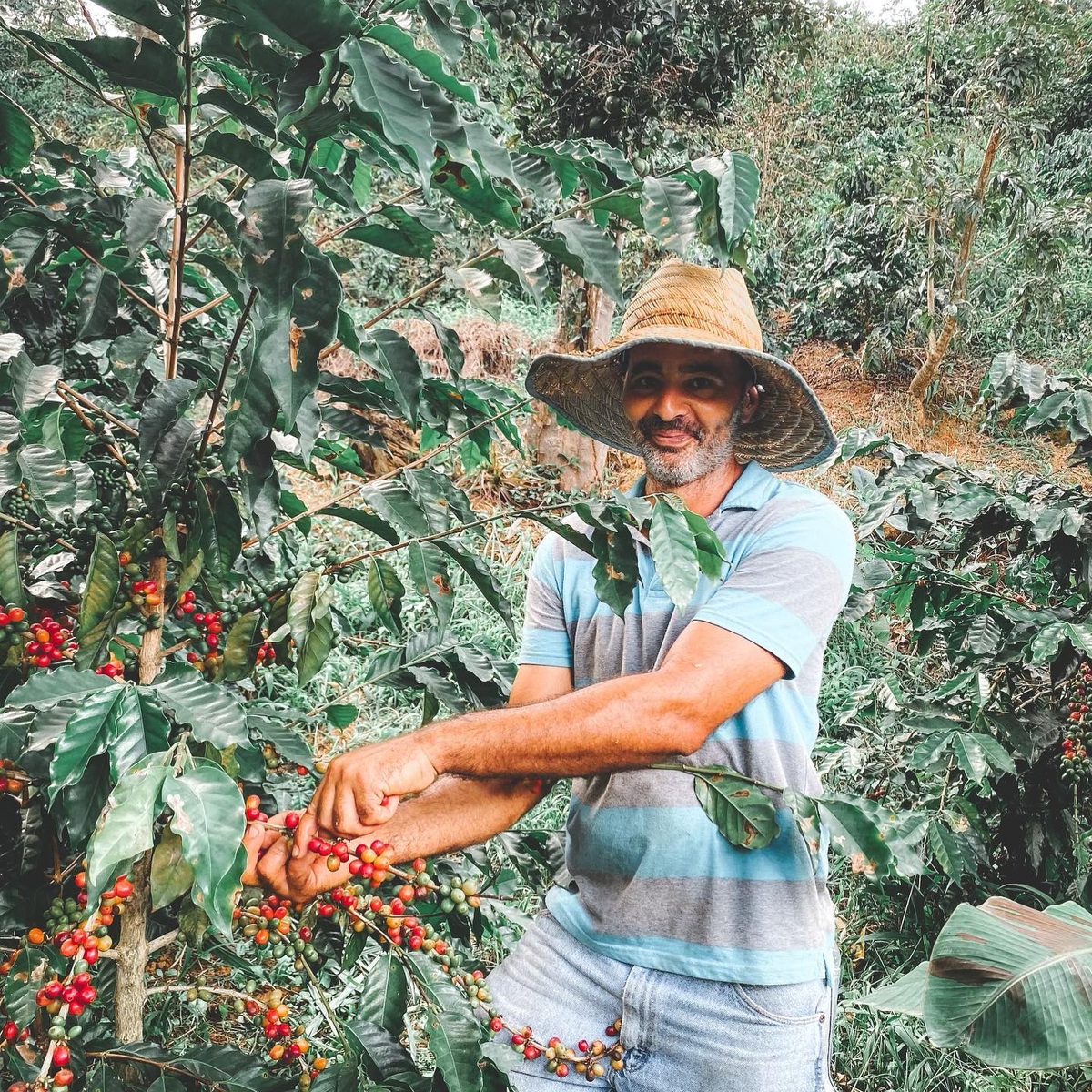
Iluminada gives 787 Coffee drinkers a reason to head into Maricao. The dated tour-booking page describes growing, processing and roasting, with coffee prepared using different brewing methods. It is a useful choice for people curious about how farming decisions and brewing choices connect.
The booking page lists an 11 a.m. start and approximately three hours, while the homepage describes a two-hour tour. Reserve the departure you want and confirm its duration directly before arranging another activity. Leaving three hours free is the more relaxed planning choice; it is not a guarantee that every tour lasts that long.
Make this a western-mountain day rather than adding it casually to a busy San Juan itinerary. Ask whether the processing equipment will be operating during your visit or demonstrated while idle. Either can be informative, but the difference matters if seeing an active harvest is your main goal.
10. Hacienda Buena Vista, Ponce: coffee history powered by water
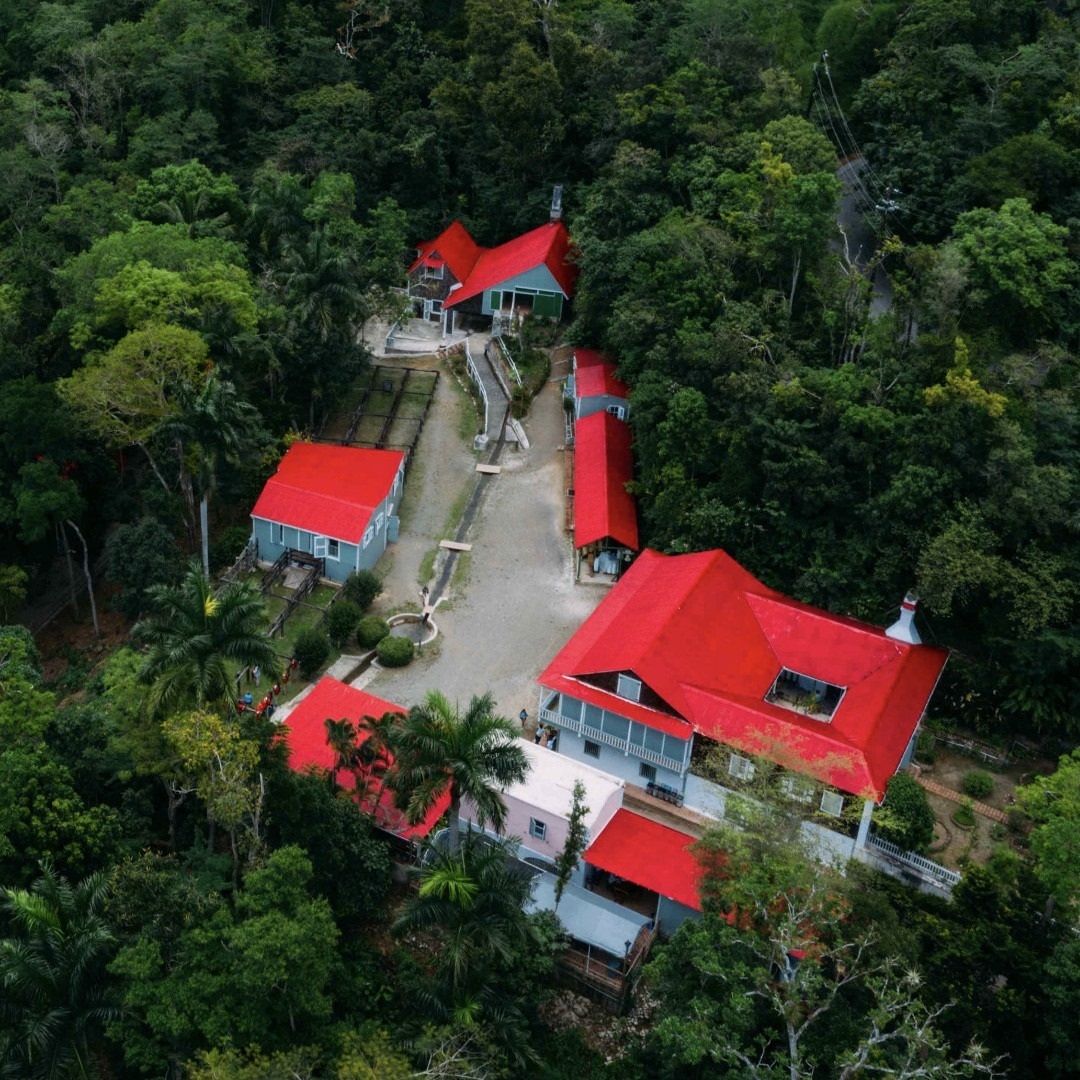
Buena Vista is a historic estate managed by Para la Naturaleza. Its appeal lies in the relationship between water, machinery, agriculture and the people whose labor supported the property. The restored hydraulic turbine and channels make this a different experience from visiting a contemporary specialty-coffee roaster.
Use Para la Naturaleza’s current visitor programs to find a suitable Hacienda Buena Vista departure. Programs can emphasize different parts of the landscape and history, so check the actual description, language and physical requirements. The reservations number is 787-722-5882.
Choose this stop if historic engineering and conservation interest you as much as tasting. Read the inclusions before promising your group a coffee flight or hands-on harvest. It also offers an opportunity to ask about the role of enslaved people in the estate’s operation, rather than treating the buildings simply as a picturesque backdrop.
11. Hacienda de Café Pomarrosa, Ponce: an option for arranged groups
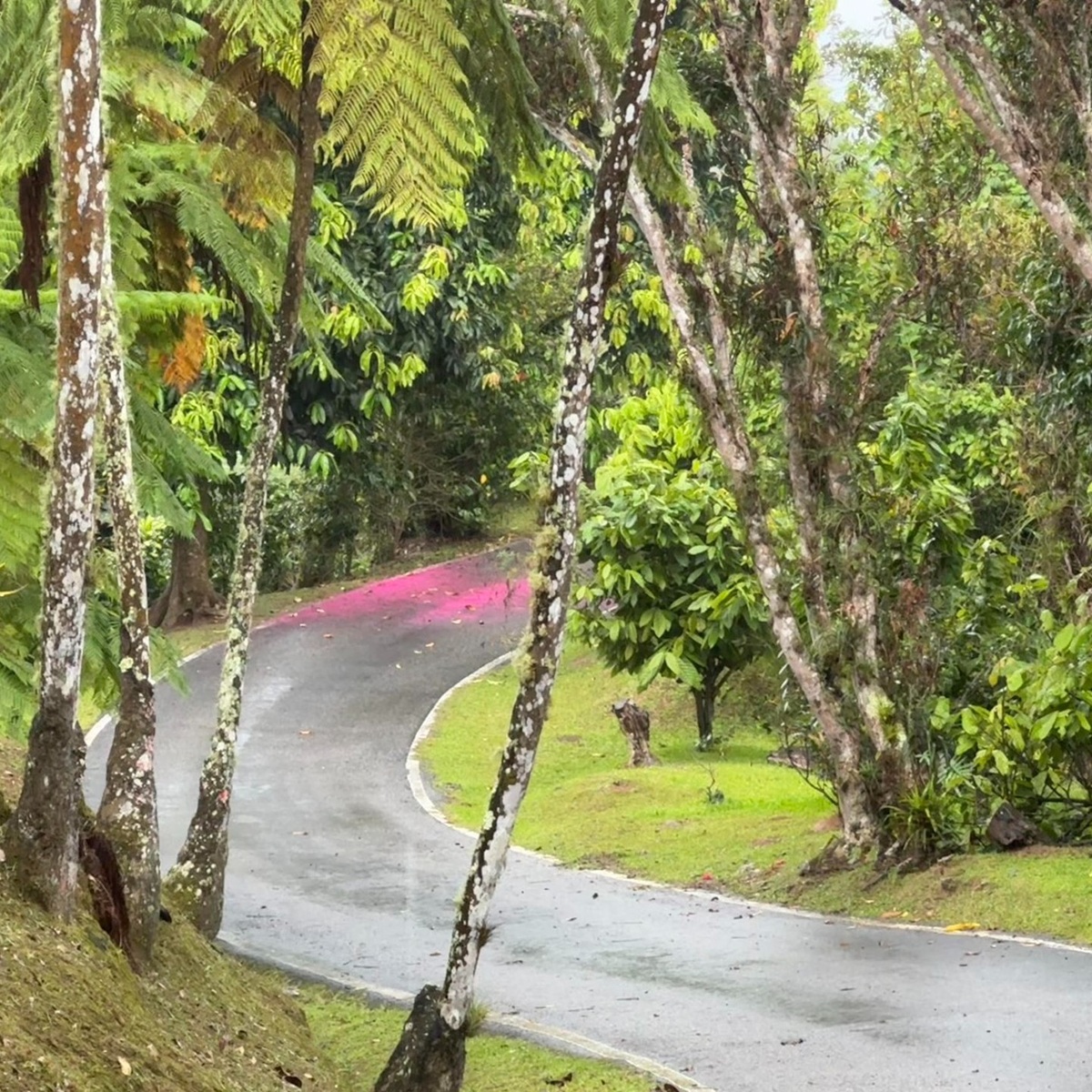
Pomarrosa needs a clear qualification. Its current official website says the working farm is closed to the public, accepts no walk-ins, and welcomes appointments for special events and large group tours.
That makes it a possible choice for a prearranged group visit, not a dependable stop for a couple driving past. Contact the farm before putting it on your itinerary and ask about the minimum group size, available dates, price, tour language, tasting and access. Do not rely on older descriptions of regular public tours or overnight stays.
Wait for a confirmed arrangement before organizing transport. If the farm cannot accommodate your group, choose one of the regularly advertised tours elsewhere in this guide. The value here is the possibility of a tailored group experience; the current website does not promise a standard public package with fixed inclusions.
When should you visit Puerto Rico’s coffee farms?
For coffee harvesting, think in terms of elevation and the individual farm, not one island-wide peak weekend. The University of Puerto Rico at Mayagüez’s coffee-production guide describes harvesting from roughly July–October in lower areas, extending into early December at middle elevations and potentially late January in higher areas.
That is an agricultural window, not a promise of ripe cherries on your tour. Ask the farm what is happening during your dates. Outside harvest, an explanation of processing equipment, a roasting discussion and a tasting may still make a rewarding visit. If you want to pick coffee yourself, get explicit confirmation of the activity and any weather-dependent changes.
Plan one main farm visit, then leave room around it
Start with your overnight base and a confirmed departure. San Lorenzo provides options southeast of the San Juan area; Orocovis, Utuado and Jayuya take you into the interior; Adjuntas, Lares, Maricao and the Ponce-area estates call for their own route planning. Compare actual driving directions from your accommodation, not distances measured across a map.
A sensible first visit is one farm tour, time to eat, and an unhurried return. Two haciendas in the same municipality are not necessarily close enough for back-to-back bookings. If you want a second stop, make it a flexible café visit after checking its hours.
With a rental car, get the operator’s preferred route, download directions before leaving and keep the return drive in daylight when possible. Without a car, book round-trip transport or an excursion that explicitly includes it. Muñoz itself warns that finding a return taxi or Uber locally can be difficult; an outbound ride is not a complete transportation plan.
Compare the whole day’s cost, not just admission
A farm’s own tour price and a guided excursion from San Juan buy different things. Before comparing them, add rental-car costs or a driver, fuel, any parking charge, meals and the return journey to the direct-admission option. For an organized excursion, check whether farm admission, transport, refreshments and booking fees are included. A light snack is not a lunch allowance.
For two or more travelers already renting a car, a direct reservation may suit the rest of the itinerary. For someone without a car, a more expensive transport-inclusive ticket can solve the hardest part of the day. Obtain the full total for your date and group before choosing; a low advertised farm price says little about what it costs to reach the mountains.
What to bring—and what to ask before paying
Wear closed-toe shoes with grip and clothes comfortable for walking in warm, damp conditions. Bring water, a light rain layer and sun protection. Pack a modest snack for the journey if needed; our travel-snack guide has options that are easy to carry. Respect each property’s outside-food rules, and do not assume a small coffee tasting replaces lunch.
Before booking, establish five things: the exact meeting point, tour language, walking requirements, what the price includes, and the cancellation or weather policy. For children, ask about minimum ages and stroller access. For limited mobility, ask about slopes, steps, surfaces, distances and seating rather than relying on a general “family-friendly” label.
At the tasting, try a sip before adding milk or sugar if that suits you. Ask which coffee you are drinking, where it was grown, how it was processed and when it was roasted. Buy the bag that matches what you liked—and ask for brewing advice suited to the equipment you actually own. That is a more useful souvenir than choosing a roast simply because the package looks familiar.