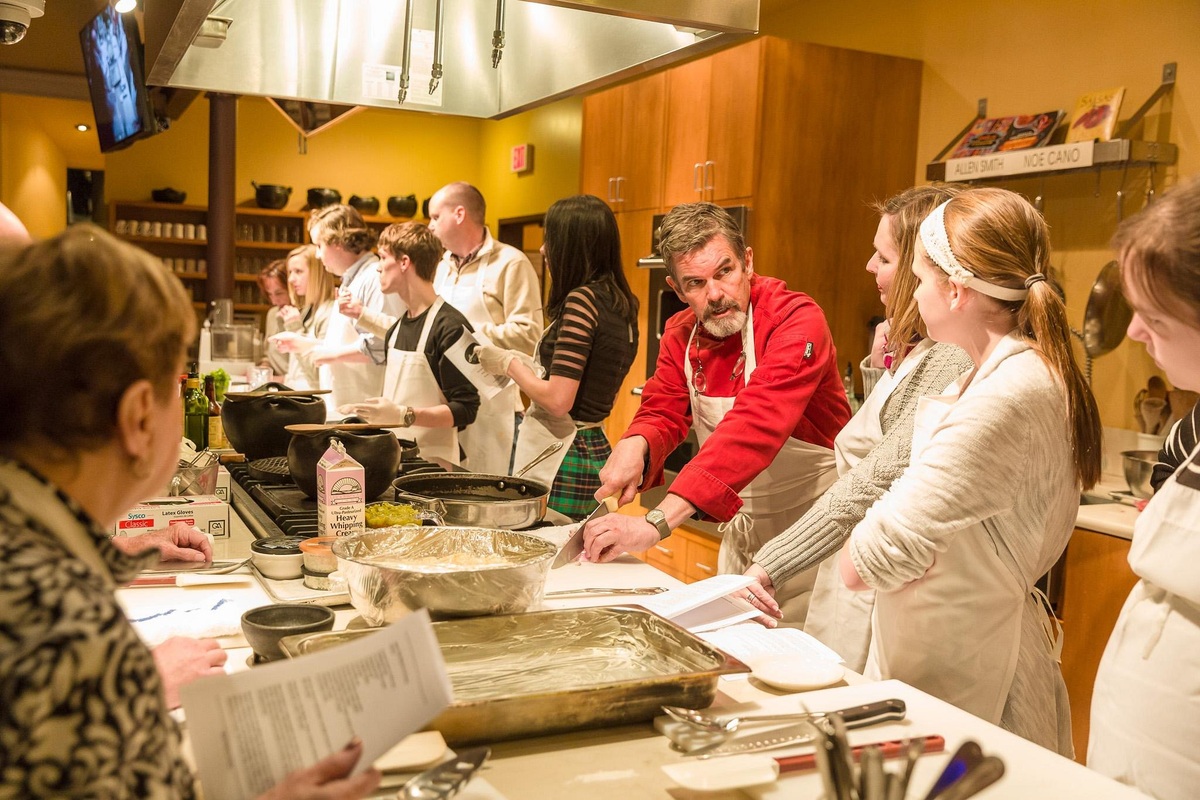
A hands-on class at Santa Fe School of Cooking | Image credit: Santa Fe School of Cooking (management) / Tripadvisor
A Santa Fe cooking class earns its place in your itinerary when it gives you something you actually want to take home: the confidence to make a chile sauce, a better understanding of New Mexican food, or a memorable meal with people you enjoy. The right choice depends as much on how you want to spend those hours as on the menu.
Start with the format, then check the date, ingredients, and booking terms. “Cooking experience” can describe anything from working at a stove to watching a chef or eating a guided lunch. Those can all be enjoyable, but they deliver different things for your vacation time.
This guide uses official school information and individual booking descriptions checked in October 2026. Prices and dated menus below are examples for comparison; use the live calendar for your own trip. Tourism Santa Fe’s culinary-workshop directory is another useful place to begin looking.
Disclosure: This article contains affiliate links. We may earn a commission if you book through them.
Choose what you want to do before choosing the school
| Format | Best reason to choose it | Question to ask |
|---|---|---|
| Hands-on class | Practice a technique with an instructor nearby | Will I make every dish or work on one part of a group menu? |
| Chef demonstration | Watch the full process, ask questions, and taste the results | Can I see the work clearly, and is a meal included? |
| Private class | Coordinate a group, date, or particular learning goal | What is the total minimum charge and confirmed menu? |
| Guided food experience | Learn through tasting and local explanation | Is any cooking instruction actually included? |
For hands-on learning, be specific about the task you care about. If your goal is to make tortillas, ask whether you will mix and shape them yourself. Working on a sauce while another group handles tortillas can still be a worthwhile class, but it may leave your main question unanswered. “Small group” also needs a number: total guests, workstations, and instructor support matter more than the phrase alone.
A demonstration is a sensible choice when you would rather follow a complete recipe than divide your attention between your own pan and someone else’s explanation. Ask about seating and sightlines if seeing fine details matters. A lively hands-on session may involve standing, moving between stations, and sharing equipment; confirm the setup before assuming it suits everyone in your party.
Santa Fe School of Cooking: compare the individual class descriptions
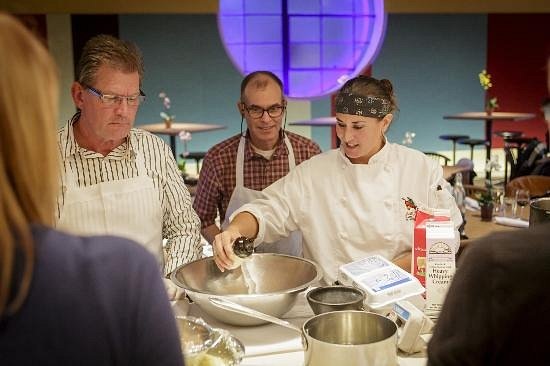
Santa Fe School of Cooking offers demonstration and hands-on classes at 125 North Guadalupe Street. Its broad schedule includes traditional New Mexican and contemporary Southwestern cooking, alongside other subjects. It is a useful starting point for a visitor seeking a regional-food class, especially when you can choose your date around a particular menu.
The school says most culinary classes last around three hours and include a full meal. Individual workshops can differ. The checked Chile Amor hands-on workshop describes two hours making tortillas and red and green chile sauces, with tastings, chips, and a recipe packet. The calendar displayed $95 for the October 20 session and a waitlist. That is a dated example of a focused workshop, rather than a promise of an available seat or a full lunch.
By comparison, the Traditional New Mexican hands-on class describes three hours and a meal, including tortillas, red-chile cheese enchiladas, green-chile chicken enchiladas, beans, posole, and bread pudding. Its checked description includes recipes and several nonalcoholic drinks, with beer, wine, and soda available to buy. The listing had no October availability at the time checked; a detailed class page is not the same thing as a scheduled departure.
Choose the focused workshop if sauce-making is the skill you want to repeat at home. Choose a broader meal class if you want to understand how several preparations fit together. Before booking, ask which stages are prepared ahead and which you will do yourself. That is especially useful for recipes with cooking or steaming stages that may extend beyond a short session.
The photographed class is an earlier school session, not a guarantee of today’s instructor, menu, or workstation layout. Check the instructor named on your selected departure if learning from a particular chef is part of your reason for booking.
Las Cosas Kitchen Shoppe: let the menu guide your choice
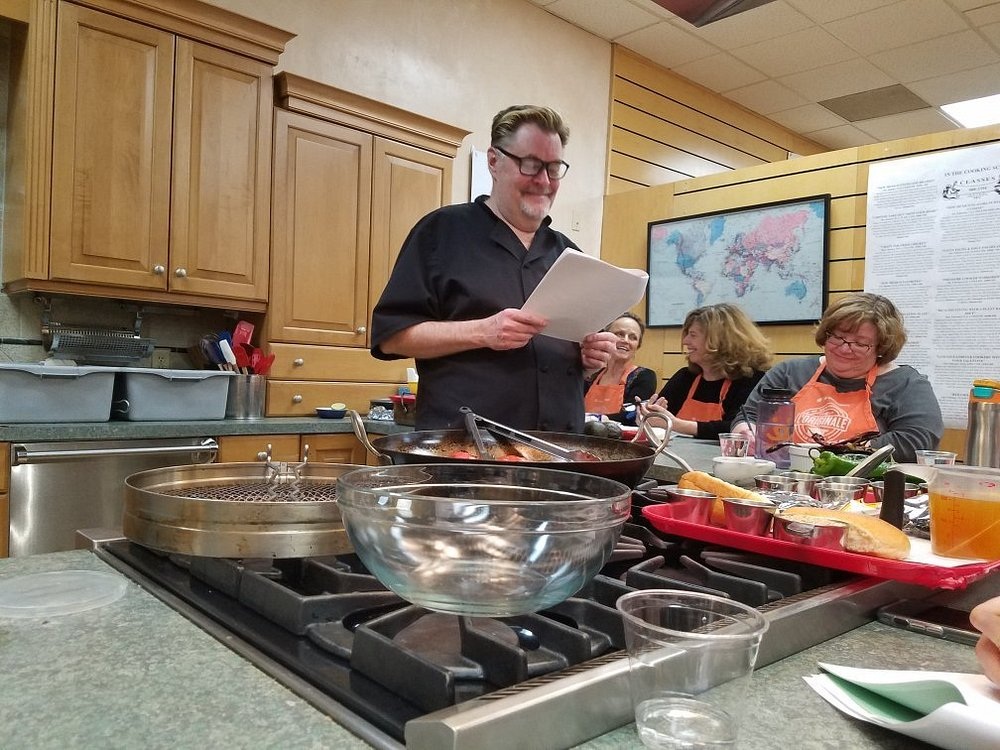
The Las Cosas class calendar gives visitors another practical option, with individual sessions covering regional dishes, baking, and international menus. Its cooking-school director is John Vollertsen, known as Chef Johnny Vee. Look for an explicitly New Mexican or chile-focused session if that is what brought you to Santa Fe; the fact that a class takes place here does not establish its cuisine.
For example, the checked Celebrating the Chiles of New & Old Mexico listing advertised October 31, 10 a.m.–1 p.m., at $99 and marked the session hands-on. Its menu included tortilla soup, queso fundido with roasted poblanos, shrimp empanadas with guajillo masa, chicken mole, arroz verde, and a chocolate-chile dessert. That gives you a much clearer idea of the food and the variety of preparations than a generic “Southwestern class” description.
A menu with several dishes is worth discussing with the school if you want to work through an entire recipe personally. Ask how the group divides tasks and whether everyone sees the crucial steps for the other dishes. Someone who wants to practice filling and sealing empanadas may value that arrangement differently from someone happy to help with any part of a shared meal.
Las Cosas lists a seven-day cancellation-notice requirement on its class listings. Check the specific booking terms before committing, particularly if your dates depend on flights or other reservations. The shop’s location information places it at 181 Paseo de Peralta in the DeVargas Center. Use the class start time for your arrival plan; retail opening hours do not establish when instruction begins.
Judge the menu by what you want to cook again
A useful class teaches something you can imagine repeating in your own kitchen. Before buying a ticket, finish the sentence: “When I get home, I want to be able to…” Making a red chile sauce, shaping tortillas, assembling enchiladas, or understanding a mole can each justify a different choice. One focused session may suit you better than the longest menu on the calendar.
Read the dishes together with their techniques. If a tamale workshop interests you, ask whether you will work on the dough, spread it, fill it, fold it, and see the steaming setup. If a chile class interests you, ask which varieties and forms it uses and whether the teaching covers seasoning and texture as well as heat. These are questions for the selected class, not assurances that every Santa Fe course includes those steps.
Be equally specific about the recipes you receive. Useful take-home instructions identify ingredients and quantities, explain the steps, and help you source substitutes where appropriate. Ask what you would need to buy before repeating the dish. A technique that works with ordinary home equipment may be more valuable to you than an impressive preparation requiring tools you do not own.
If cultural context is your priority, read the class’s named subject and instructor information. New Mexican, Mexican, Spanish, and Native American cooking are not interchangeable course labels. Look for a clear description of the traditions and recipes being taught, and choose the particular subject you want to learn about.
Compare the whole booking cost
The checked $95 workshop and $99 Las Cosas session are examples, not a citywide price range. Their inclusions differ, so comparing only the ticket price misses the point. A sauce tasting may leave you planning another meal; a multi-course class may fill the lunch or dinner slot in your itinerary.
Compare the final checkout total for everyone attending, including any displayed taxes, fees, drinks, and transport. Check whether recipes and ingredients are included, whether any gratuity is expected, and whether an advertised starting price applies to your date. You can review those details without completing a purchase.
For a private group, Santa Fe School of Cooking’s private-class information describes both hands-on and demonstration formats, with menus arranged for the group. Request a written quote that confirms guest count, menu, instruction time, drinks, and the total charge. A private booking can solve a schedule problem or let a group share a chosen menu, but customization and dietary accommodation still need explicit agreement.
Send one useful message before booking
To resolve the details that calendars often leave unclear, try: “We are visiting on [date] with [number] people. We want to practice [technique], and we need [dietary or access arrangement]. Will each guest do that task, how long is the session, is a meal included, and what is the total price and cancellation deadline?” Keep the response with your confirmation so everyone in your group knows what was agreed.
Confirm food restrictions and practical access before paying
Send the provider your actual restriction and ask about the exact menu. A vegetarian option does not automatically address dairy, gluten, nuts, or another allergy. Ask whether ingredients can be changed, whether the food is prepared communally, and what the kitchen can confirm about shared equipment. A generic “dietary requests welcome” statement is the start of the conversation.
Chile tolerance is a separate question. Tell the school if you prefer mild food and ask which parts of the class can be adjusted. A sauce prepared for the whole group may offer different flexibility from a garnish served separately. Avoid assuming that a particular color of sauce tells you how comfortable the meal will be for you.
For more help organizing the conversation, our guide to traveling with food allergies covers planning ahead. Get a clear response before making a nonrefundable commitment when a restriction determines whether you can participate.
Also confirm standing time, seating, work-surface access, restrooms, and any steps on the route. A building’s entrance alone does not tell you whether a hands-on station will work for you. For children, ask about the minimum age, knife or stove participation, supervision, and whether an accompanying adult also needs a ticket. Family photos and broad “all levels” language do not establish those rules.
When a guided lunch is the better use of your time
If you mainly want to understand the flavors while someone else cooks, consider Red or Green: Chef-Guided New Mexican Lunch Immersion, operated by Wander New Mexico. Its Expedia and Viator listings describe about two hours, a Railyard-area walk, a guided New Mexican lunch, and beverage tastings. This is a food tour and lunch, not a hands-on lesson. Choose it for tasting and explanation rather than expecting to prepare the meal.
Both checked listings showed a starting price of $149 per person. They request advance notice—at booking or no later than 48 hours ahead—for gluten-free, vegetarian, or nonalcoholic substitutions. The descriptions also include walking requirements, so confirm the current route and your access needs directly. Their location and age details should be checked on the actual departure you intend to book.
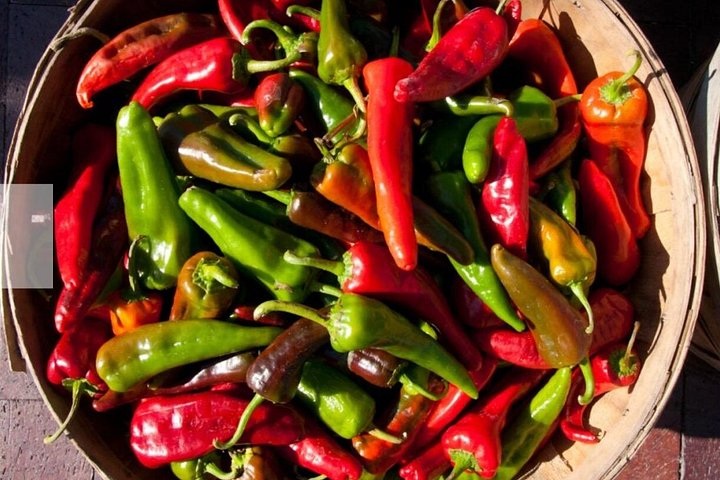
The two buttons below lead to the same lunch experience on different booking platforms. Compare the available dates, final total, and ticket conditions, then make one booking. The promotional photograph illustrates the chile focus; it is not a promise that the pictured ingredients will be used on your particular tour.
Check the Chef-Guided Lunch on Expedia
Compare the Same Lunch on Viator
Protect the time around your class
Treat a three-hour class as the main appointment in that part of your day. Add time to reach the correct address, park or walk from your drop-off point, and check in at the provider’s requested time. Leave enough space afterward to finish the meal and gather your things before another fixed reservation.
For a first visit, a morning of flexible sightseeing followed by a class can be easier to manage than placing instruction immediately after a long day trip. If the session includes a full meal, keep the adjacent meal light or leave it unreserved. If it promises only tastings, plan where you will eat afterward.
Keep the ticket and cancellation deadline together in your trip notes. The checked Santa Fe School of Cooking hands-on listing allowed a refund or credit with 48 hours’ notice, while Las Cosas requested seven days; the lunch tour’s Viator listing stated a 24-hour cancellation window. Apply the terms on your chosen booking, including its local-time deadline, rather than transferring a policy from another class or platform.
Common questions before booking
Are Santa Fe cooking classes suitable for beginners? They can be, and the school’s general information welcomes different skill levels. For the specific class, ask what prior skills are expected and how instructors assist people at different stations. A welcoming description is useful; a clear explanation of what you will actually do is more useful.
Will I cook everything on the menu? Do not assume so. Ask whether the work is divided among teams, whether you rotate, and which dishes or steps are demonstrated. That answer matters most when you are booking to learn one particular technique.
Can I book a class just for my group? Private formats are available through the school, subject to an agreed arrangement. Ask about the full price and confirm the menu and format. A private chef’s meal and a private cooking lesson are different requests.
Does a class page mean I can book it during my trip? No. Some detailed class pages remain visible when no departure is offered for your dates. Check the calendar, read the availability status, and distinguish a waitlist from a confirmed reservation. If your ideal menu is unavailable, choose another date or ask about a private option before building the rest of your day around it.
How do I make the final choice? Pick the format you want, identify one learning goal, and choose a dated session whose menu and practical arrangements fit your group. Once the provider has answered the important questions, you have a much stronger basis for booking than a star rating or an attractive food photograph alone.