
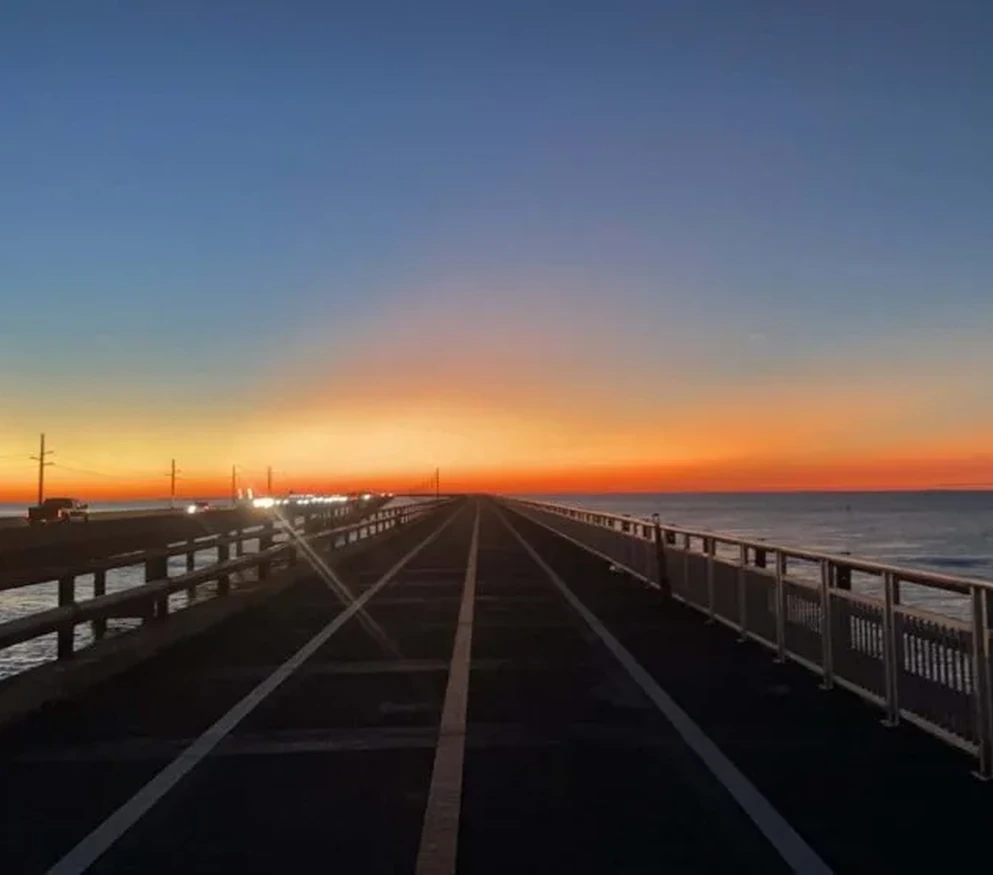
Image Credit: Pigeon Key
Drive through the Florida Keys and the old railroad keeps appearing beside you: a line of concrete arches, a bridge carrying no cars, a small island beneath a span that once brought trains toward Key West. The Overseas Highway is a scenic road trip, but it also follows the story of a railway that changed the island chain before a hurricane ended its service.
Henry Flagler’s Overseas Railroad reached Key West in January 1912. The Labor Day hurricane of 1935 damaged the route so severely that rail service did not return. Surviving structures later helped carry the highway. The story is one of destruction and reuse—not of every bridge being swept away.
On this page6
Begin with the railroad beneath the road trip
Florida State Parks’ history of the Flagler Railroad explains the link between the railway, its 1935 ending, and the historic bridges that remain part of the Keys landscape. The road you drive today is not one continuous stretch of original railroad bed, but the two transport stories repeatedly intersect.
Plan this as a north-to-south journey with time to stop. A route driven only to reach Key West can reduce the old structures to quick glimpses through a windshield. Giving the history its own stops changes what you notice between them.
1. Pause in Islamorada for the human cost
The hurricane story belongs to people as well as engineering. Islamorada’s hurricane memorial, near mile marker 82, commemorates those who died in the 1935 disaster. Its location is noted in the local historical overview.
Make this a quiet stop rather than simply another photograph to collect. The later reuse of the route can make the railway’s ending sound like an orderly transition, when it began with a catastrophic storm.
If you are traveling with children, explain that the road trip is following both an ambitious building project and the consequences of a natural disaster. That gives the bridges farther south a context beyond their size.
2. Look for the old Long Key crossing
Long Key is one of the historic railroad bridge sites identified by Florida State Parks. The surviving structures help show how much of the project depended on crossing open water, not simply laying tracks along land.
Use lawful parking and public access points for any stop. Seeing an old bridge beside the highway does not mean every approach or span is open to visitors. Do not let a navigation pin or a gap in a barrier stand in for an access notice.
3. Give Pigeon Key time in the itinerary
Near Marathon, Pigeon Key makes the railroad story easier to explore on foot. The island was associated with the workforce that built the crossing, and the old bridge connection now gives visitors a different view of the water and engineering.
The Pigeon Key visitor information identifies the check-in point at 1090 Overseas Highway in Marathon. Its current tour page describes guided visits and the option of reaching the island by the visitor train or walking the old bridge route. The visitor train is a modern tour service, not a restored through-rail journey to Key West.
The walkable connection from Marathon to Pigeon Key is about 2.2 miles each way, according to the foundation’s bridge history. Decide whether that distance in both directions suits your group, particularly in heat or wind. Check current admission and tour arrangements before arriving; access to the bridge and admission to the island are separate questions.
4. Read the layers at Bahia Honda
Bahia Honda’s old bridge makes the shift from railway to highway visible. Florida State Parks’ history explains that the state purchased the structure after the hurricane and adapted it for road use. Its surviving accessible portion now provides an overlook.
This is a good place to consider how a structure can have several working lives. The railway did not return, but parts of its engineering continued to shape how people moved through the Keys.
Stay within the park’s permitted access. The dramatic appearance of the old span is not an invitation to cross closed sections.
5. Finish in Key West, the original destination
Reaching Key West completes the geographic story of the railroad’s southward ambition. Pigeon Key’s historical account dates the inaugural arrival to January 22, 1912—an endpoint that helps connect the scattered bridge remnants into one undertaking.
For a more comfortable pace, consider an overnight stop around the Middle Keys before continuing south. That is a suggested itinerary, not a requirement: the right schedule depends on how much time you want at the historical stops and on the water.
Check current park and tour information before leaving, carry water for exposed walks, and give the driver opportunities to stop before studying the old structures. The most rewarding version of this road trip lets the highway do more than carry you to the end. It shows how the Keys were connected, how that connection failed, and how parts of it were used again.